
Oil prices fell for a fourth consecutive session on Monday, with U.S. crude dropping below $100 a barrel to its lowest level in more than a week as investors weighed possible diplomatic progress in the U.S.-Iran conflict against signs that energy shipments through the Strait of Hormuz are recovering.
West Texas Intermediate crude fell more than 2% to around $98 a barrel in early trading, after briefly trading lower, while Brent crude declined toward $102. Both benchmarks touched their lowest levels since Sept. 10.
The decline extends last week’s retreat from recent highs as some of the geopolitical risk premium built into crude prices begins to ease. The shift follows indications that Washington and Tehran could resume diplomatic contacts during this week’s United Nations General Assembly in New York.
Trump Signals Openness to Meeting Iran’s President
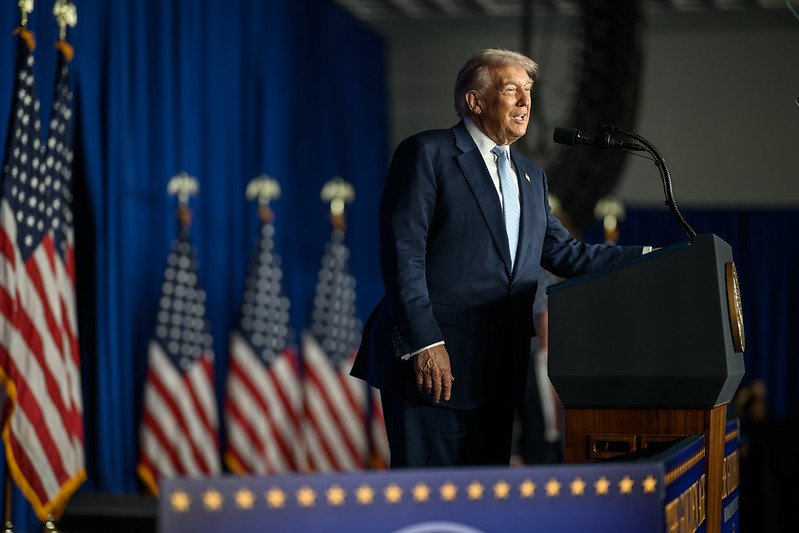
President Donald Trump said Sunday that he would “probably” be open to meeting Iranian President Masoud Pezeshkian on the sidelines of the U.N. General Assembly, raising the prospect of renewed dialogue between the two governments. Iran has separately communicated conditions for re-engaging with Washington through intermediaries, according to reports cited by ICIS.
Trump is also scheduled to meet Chinese President Xi Jinping this week and may hold discussions with leaders from Persian Gulf countries.
The possibility of diplomatic engagement has contributed to lower oil prices, although no agreement to de-escalate the conflict has been announced.
Hormuz Energy Shipments Reach Six-Month High
Another factor reducing immediate supply concerns is the recovery in shipping through the Strait of Hormuz, one of the world’s most important energy corridors.
U.S. Central Command chief Admiral Brad Cooper said crude oil, LNG and cargo volumes passing through the strait during the past two weeks were higher than at any point in the previous six months.
Cooper said the main transit lanes have been cleared of mines and that U.S. forces have supported more than 2,000 commercial vessel transits, including shipments totaling more than 1 billion barrels of crude oil from Gulf partners in recent months.
Independent shipping indicators, however, present a more mixed picture. Reuters reported that vessel-tracking data showed fewer commodity vessels crossing Hormuz over the weekend than during the previous weekend, while other data indicated Saudi exports have recovered significantly from August lows.
The figures suggest energy flows are improving but have not necessarily returned to pre-conflict conditions.
Saudi Arabia Redirects Oil Through Hormuz
The improvement is particularly significant because Saudi Arabia’s East-West Pipeline, which allows crude to reach Red Sea export terminals without passing through Hormuz, remains disrupted following drone attacks earlier this month.
Saudi Aramco has responded by redirecting additional crude through Persian Gulf terminals and the Strait of Hormuz. Saudi exports have recovered to just over 4 million barrels per day so far in September, after falling to about 2.4 million barrels per day in August, according to Kpler data cited by Reuters.
The recovery has helped offset some of the supply concerns generated by the pipeline shutdown.
Supply Risks Have Not Disappeared
Despite Monday’s decline, geopolitical risks remain elevated.
Saudi Arabia faced renewed Houthi attacks over the weekend, including a ballistic missile targeting Riyadh and additional attacks aimed at other locations, including the Red Sea oil port of Yanbu. Saudi defenses intercepted the attacks, according to reports cited by Bloomberg.
The combination of improving Hormuz traffic and potential U.S.-Iran diplomatic contacts has nevertheless shifted the immediate balance in the oil market.
After weeks in which prices were dominated by fears of restricted Middle Eastern supply, traders are now assessing whether improving export flows and diplomacy could remove part of the geopolitical premium that pushed crude above $100 a barrel.