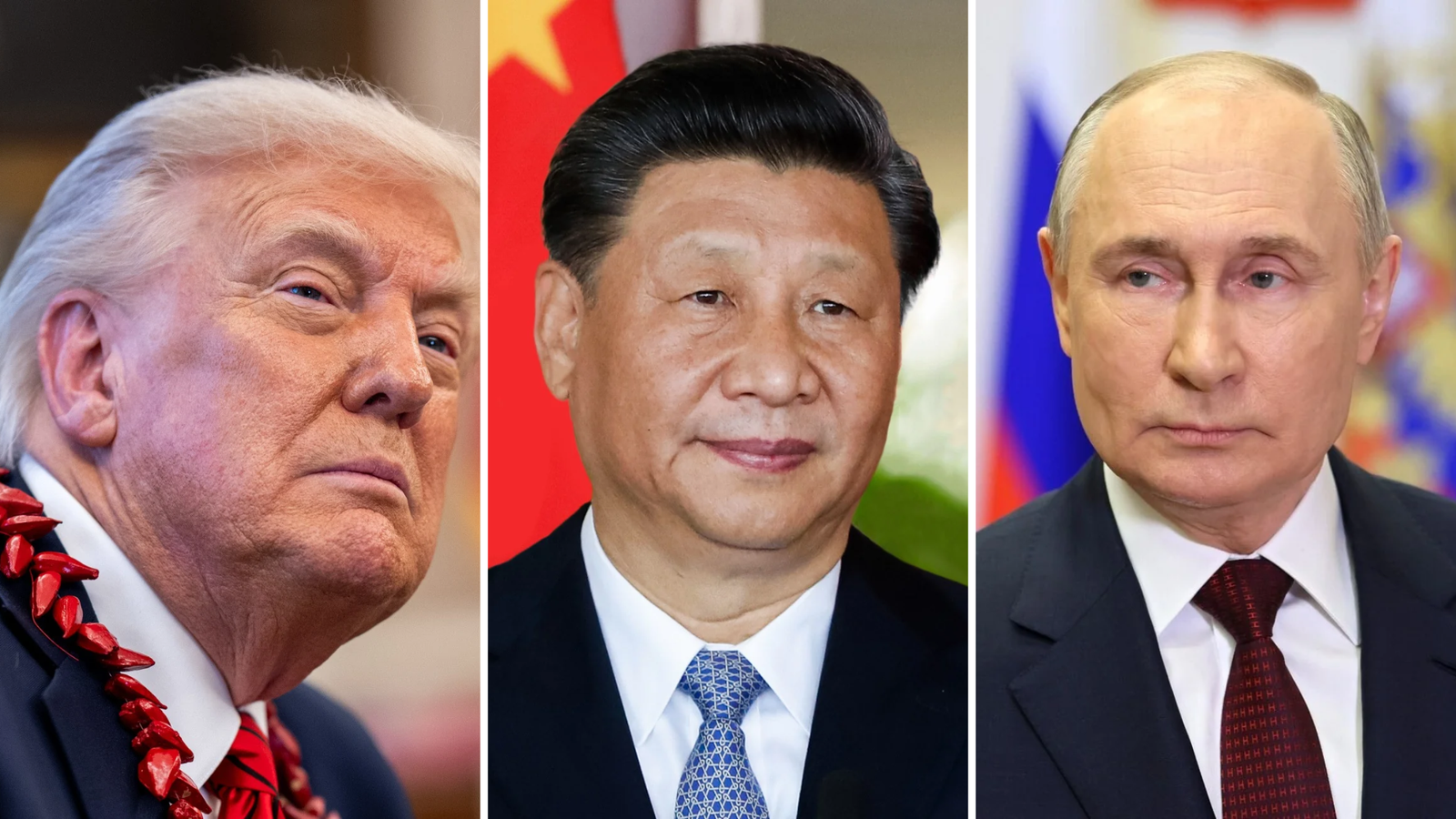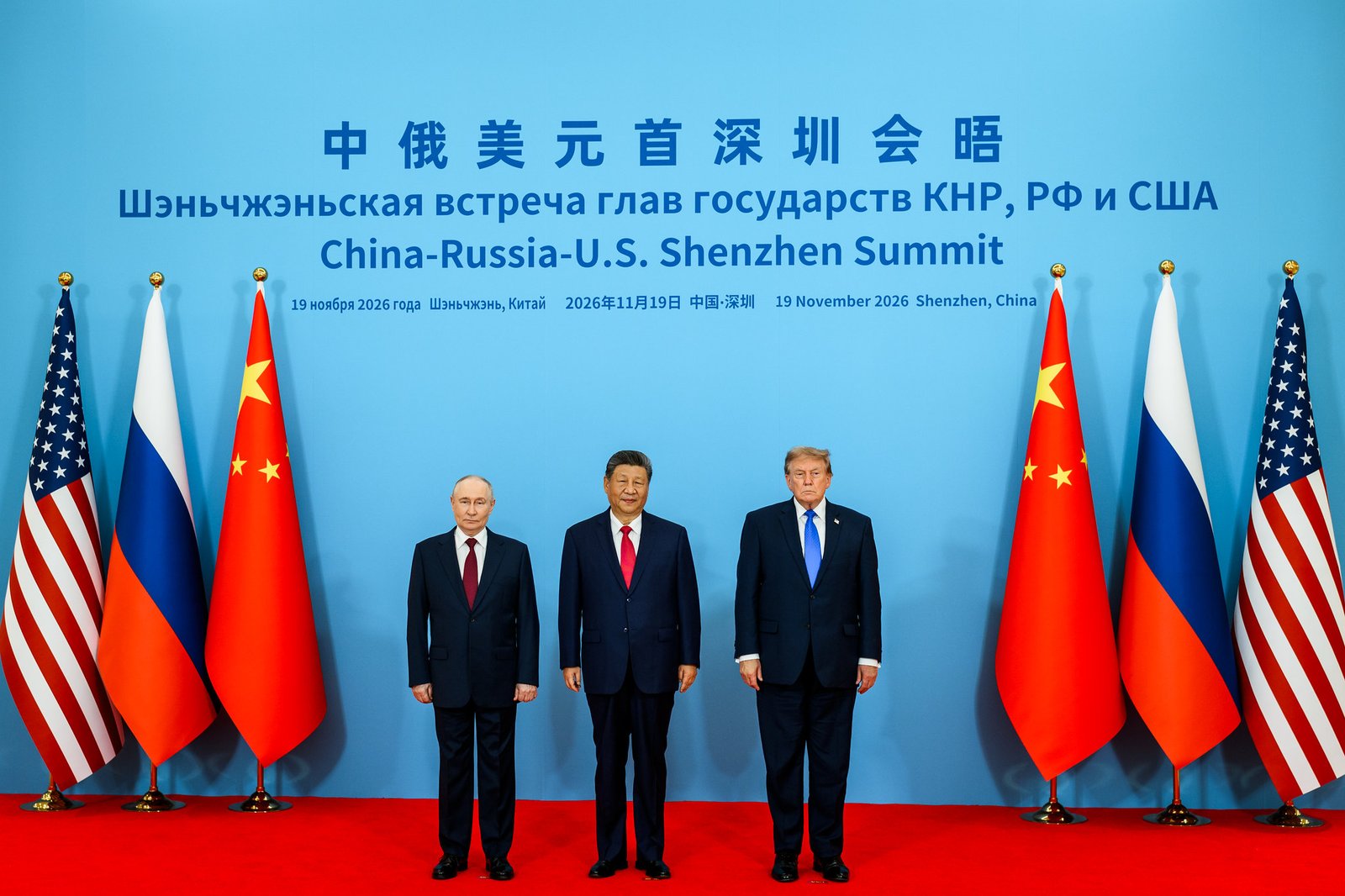

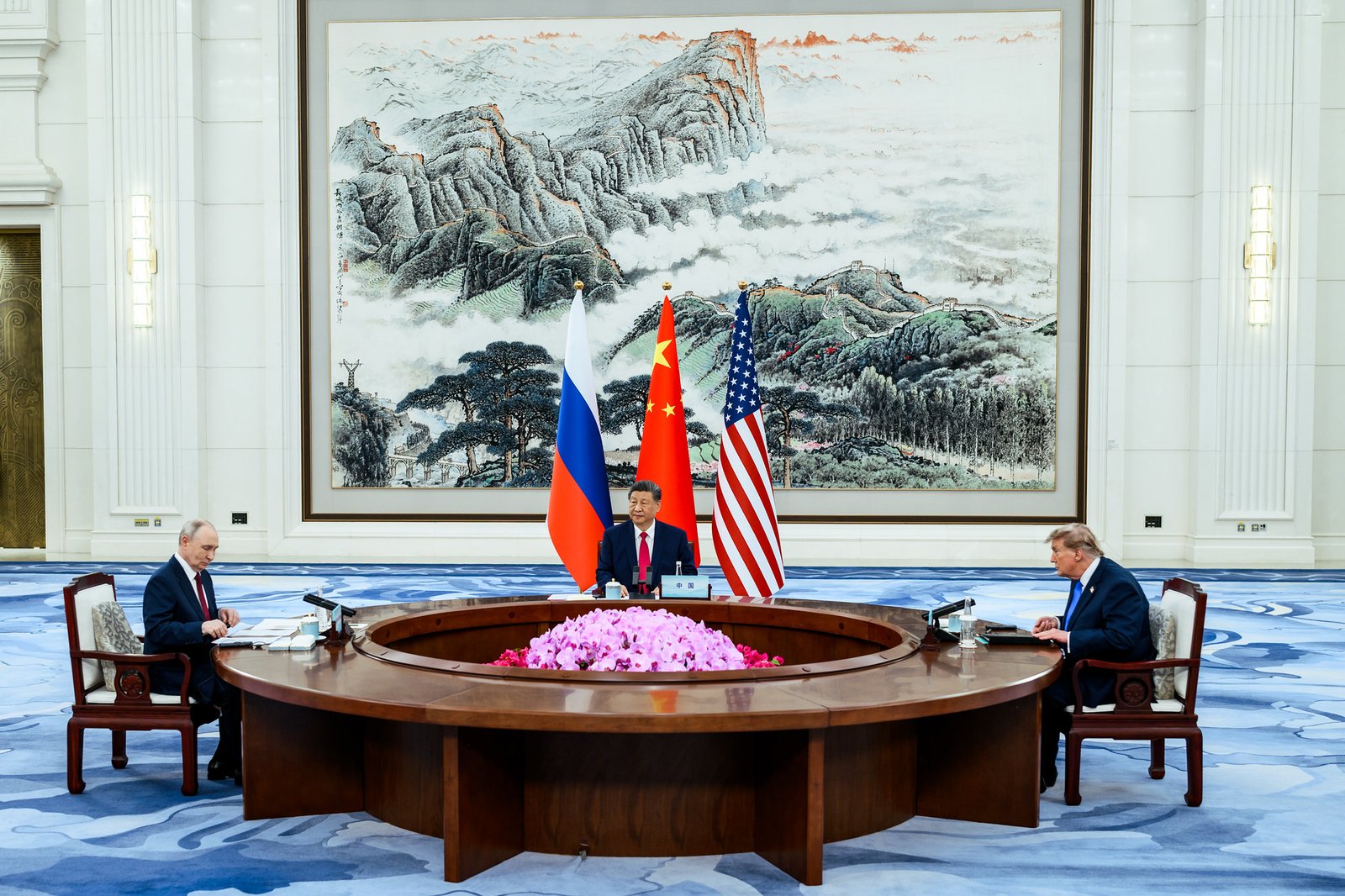
The first trilateral meeting between the presidents of the United States, China and Russia ended with a pledge to discuss reducing nuclear risks and preventing the spread of nuclear weapons. The declaration issued after Donald Trump, Xi Jinping and Vladimir Putin met on Thursday (Nov. 19) in Shenzhen, China, sets no targets for reducing nuclear arsenals and provides no verification mechanisms or timetable for talks.
For Gregg Roman, executive director of the Middle East Forum, the difference between a diplomatic commitment and verifiable progress depends on what governments do after the summit. In a written response to a request for comment from Money In Focus News, Roman, a former political adviser to Israel’s deputy foreign minister, said keeping a channel open among the three powers is useful. In his assessment, negotiations over Iran’s nuclear program would begin to take shape once three steps become public: the naming of negotiators, the announcement of a meeting date and the release of terms for nuclear inspections.

The meeting took place on the sidelines of the Asia-Pacific Economic Cooperation (APEC) summit and lasted about 70 minutes behind closed doors, according to the Associated Press. The joint declaration covers four areas. Alongside the nuclear dialogue, the governments called for reform of the United Nations, expressed their intention to increase the production and supply of refined petroleum products, and took a common position on the immunity of state officials and the exercise of jurisdiction by the International Criminal Court (ICC). The text does not specify which UN reforms the three countries support or how much they intend to increase fuel supplies.
Trump presented the meeting as an opportunity to start discussions on nuclear risks and the wars in Iran and Ukraine. According to the AP, the U.S. president said he and Xi agreed on the need to fully reopen the Strait of Hormuz, a strategic route for global energy supplies, and to prevent Iran from obtaining a nuclear weapon. The trilateral declaration calls for stable energy flows and nuclear nonproliferation. It mentions neither Hormuz nor Iran.
Xi, who hosted the summit, called for regular high-level contacts and communication mechanisms to prevent crises. According to China’s Ministry of Foreign Affairs, he also proposed closer coordination on energy security and called for stability in industrial and supply chains. The meeting gave Beijing a chance to present those priorities to Washington and Moscow at the same table.
Putin emphasized the three countries’ role as permanent members of the UN Security Council and mentioned Ukraine in his opening remarks. According to the AP, the war came up in the Russian president’s bilateral meetings with Trump and Xi. Kremlin spokesman Dmitry Peskov said the conflict was a secondary topic in the trilateral discussion. After the summit, Putin again backed a proposal that would require Ukraine to cede territory in the Donbas, according to the Financial Times.
What Shenzhen delivered on nuclear risks
The summit came just over nine months after the expiration of New START, a bilateral treaty that limited U.S. and Russian strategic nuclear arsenals and provided for verification. On February 5, UN Secretary-General António Guterres said the treaty’s expiration had left the two countries without binding limits on those arsenals for the first time in more than half a century. The treaty applied only to the United States and Russia. In Shenzhen, the three governments pledged to discuss nuclear risks. The declaration announced no verifiable limits on their arsenals.
Roman draws attention to the gap between the issues discussed in Shenzhen and the commitments published afterward. Iran and Ukraine were on the diplomatic agenda, yet neither country appears in the joint declaration. The document likewise establishes no ceasefire in either war. In Roman’s assessment, the pledge to keep talking has immediate diplomatic value. Measurable risk reduction requires steps that can be tracked and verified.
Iran offers the first test of follow-through
As the leaders met in China, access to Iranian nuclear facilities was under discussion in Vienna. In a statement published on November 19, the United States, the United Kingdom, France and Germany called on Tehran to provide information about its nuclear facilities and material and to grant access to sites requested by the International Atomic Energy Agency (IAEA). According to Reuters, Iran attributes the standoff to security conditions created by U.S. and Israeli attacks. Reuters reported that inspectors have been unable to access the facilities struck in June 2025 since those attacks.
That is where Roman’s three criteria come into focus. Naming negotiators identifies who is responsible for leading the talks. Setting a date gives the public a milestone to track. Publishing the terms for inspections shows what access inspectors would have and under what conditions they could verify compliance with any commitments. Roman proposed these steps as benchmarks for what comes next.
For Roman, the next evidence of progress would be a process that can verify compliance with whatever is agreed. In practice, that means watching whether diplomacy enables the IAEA to resume inspections at the facilities it has requested access to and clarify the status of Iran’s nuclear material. Governments are already confronting that question in Vienna.
Sources
- Money In Focus News — Exclusive written comments from Gregg Roman, executive director of the Middle East Forum, in response to a request for comment. Gregg Roman’s official biography
- The White House — U.S.-Russia-China Heads of State Declaration toward Peace, November 19, 2026.
- China’s Ministry of Foreign Affairs — Official readout of the China–Russia–U.S. summit chaired by Xi Jinping, November 19, 2026.
- Associated Press — Reporting on the trilateral talks and their outcome and key takeaways from the Shenzhen summit, November 19, 2026.
- Financial Times — Putin’s post-summit remarks on negotiations over Ukraine, November 19, 2026.
- United Nations — Secretary-General António Guterres’s statement on the expiration of New START, February 5, 2026.
- United Kingdom Foreign, Commonwealth & Development Office — Joint statement by France, Germany, the United Kingdom and the United States to the IAEA Board of Governors on Iran’s nuclear safeguards, published November 19, 2026.
- Reuters — Reporting on the dispute over IAEA access to Iranian nuclear facilities, November 19, 2026.