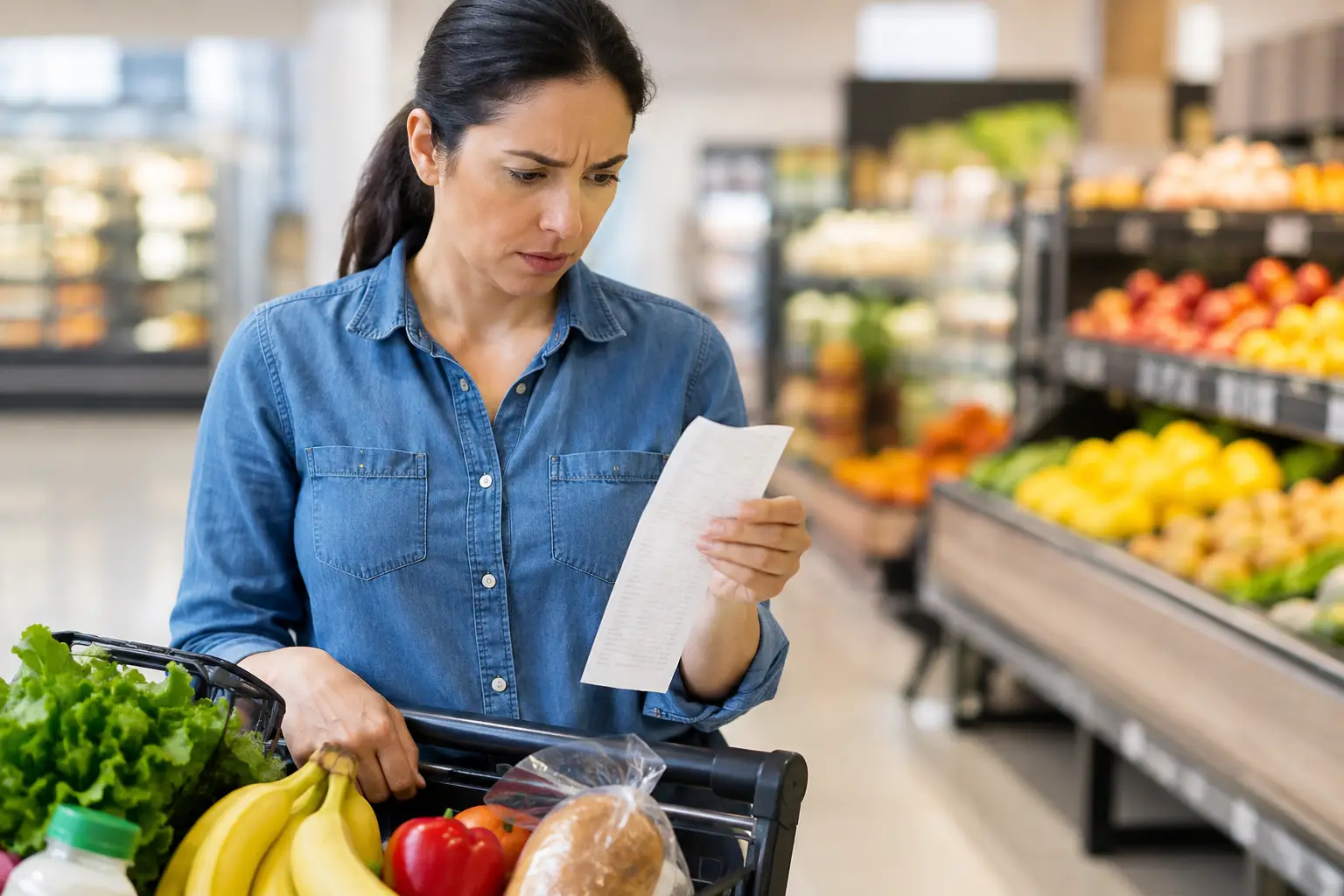

A grocery receipt has become one of the clearest inflation reports in America. Grocery price increases do not need to be dramatic in a single week to strain a household budget. A few extra dollars on eggs, meat, coffee, produce, and packaged staples can add up quickly, especially for families buying the same essentials every seven days.
For consumers, the frustrating part is that a slower overall inflation rate does not necessarily mean a lower grocery bill. It means prices may be rising less quickly than before. The higher price level remains, and food costs are shaped by a different mix of pressures than many other household purchases.
Why Grocery Price Increases Persist
Food inflation starts far beyond the supermarket aisle. A box of cereal, a pound of chicken, or a bag of apples reflects costs across a long supply chain: farm labor, feed, fertilizer, fuel, processing, packaging, trucking, refrigeration, warehousing, and retail operations. Pressure at any point can move through the system, although not always immediately.
Weather has become a major variable. Drought can reduce crop yields, floods can disrupt harvests, and extreme heat can affect livestock productivity. A disease outbreak in poultry flocks can tighten egg and chicken supplies. These events are often regional, but food markets are interconnected. When a major producing area is hit, buyers across the country can face less supply and more competition for what remains.
Commodity markets matter, too. Corn, wheat, soybeans, sugar, cocoa, coffee, and livestock feed are inputs that affect thousands of grocery products. A rise in cocoa prices can show up in candy and baking products. Higher feed costs can pressure meat, dairy, and egg producers. The transmission is uneven because food companies may hedge purchases or absorb part of the increase for a period, but the direction of travel is hard to ignore when raw materials stay expensive.
Energy is another overlooked driver. Diesel prices affect trucks delivering food to distribution centers and stores. Natural gas is used in fertilizer production. Electricity keeps refrigeration systems running from processing plants to supermarket freezers. When energy markets jump, food businesses must decide whether to absorb those costs, reduce margins, or pass them to shoppers.
Labor costs also remain central. Food production and retailing are labor-intensive businesses, from farmworkers and meatpacking employees to warehouse crews, truck drivers, and checkout staff. Wage growth can be positive for workers while still adding to operating costs for companies working on thin margins. That creates a real trade-off: cheaper food is difficult to achieve if every part of the supply chain is paying more for people, transport, and facilities.
Not Every Grocery Aisle Moves the Same Way
The grocery basket is not one market. Fresh produce can be highly volatile because it depends on growing conditions and seasonality. Meat prices respond to herd sizes, feed expenses, processing capacity, and export demand. Dairy depends on milk production and feed, while packaged food can be more influenced by ingredients, marketing, packaging, and brand strategy.
That is why shoppers may see one category fall while another jumps. A cheaper gallon of milk does not offset a sharp increase in ground beef for a household that buys both every week. The experience of inflation is personal because each family has a different basket of goods, dietary needs, and ability to switch brands.
There is also a difference between a temporary spike and a structural reset. Egg prices, for example, can move sharply when supply is disrupted and ease when production recovers. But a product that has absorbed years of higher wages, rent, insurance, transportation, and packaging may not return to its old shelf price even after a specific shock fades.
Retail promotions can further complicate the picture. A shopper may see aggressive discounts on one item while the regular price of a familiar brand stays elevated. Grocers use promotions to bring customers into stores, manage inventory, and compete locally. That can produce bargains, but it does not necessarily signal broad-based relief across the grocery bill.
Shrinkflation Is Part of the Equation
Shelf prices tell only part of the story. Shrinkflation occurs when a package gets smaller while the price remains the same or rises. A snack bag with fewer ounces, a smaller container of ice cream, or fewer sheets in a paper product can raise the unit price without creating an obvious sticker shock.
Consumers should compare price per ounce, pound, or unit, not just the headline price. This is especially useful for packaged goods, where manufacturers can alter sizing more easily than they can make a visible price increase. Store brands often offer a clearer comparison because their packaging and pricing tend to be less tied to national advertising campaigns.
What It Means for Household Budgets
Grocery price increases are particularly difficult because food is not optional and cutting back has limits. Households can postpone a vacation, delay a vehicle purchase, or cancel a subscription. They still need to eat. Lower-income households feel the squeeze most intensely because groceries take up a larger share of monthly spending and there is less room to trade down without sacrificing nutrition or convenience.
The pressure extends beyond the checkout line. When families spend more on food, they may reduce spending on restaurants, apparel, home goods, entertainment, and discretionary travel. That shift matters for the broader economy because consumer spending is a major source of demand for businesses. It also changes corporate results: discount retailers may gain traffic, restaurants may see customers trade down, and food manufacturers may face tougher volume comparisons even if their revenue rises from higher prices.
For investors, grocery pricing is a useful read on consumer behavior. Companies can report strong sales because they raised prices, but unit volumes reveal whether shoppers accepted those increases. Persistent volume declines can signal that customers are moving to private labels, buying fewer items, or changing where they shop. Pricing power is valuable, but it is not unlimited.
How Shoppers Can Respond Without Sacrificing Every Choice
The practical answer is not to chase every sale or eliminate favorite foods. A more effective strategy is to concentrate flexibility where it has the most financial impact. Start with categories that make up the largest share of your weekly bill, such as protein, beverages, snacks, prepared foods, and household supplies. A small change in a high-spend category can matter more than saving a few cents on a single pantry item.
Buying store brands can help, but it depends on the product. For basic staples like flour, canned vegetables, pasta, frozen fruit, and many cleaning supplies, private labels can offer comparable value. For products where taste, dietary requirements, or performance matter to your household, paying for a preferred brand may still be rational. The goal is not to buy the cheapest item. It is to avoid paying a premium by habit.
Timing also matters. Produce that is in season is often less expensive and better quality. Larger packages can lower the unit cost, but only if the food will be used before it spoils. Bulk buying perishable items creates a false economy when part of the purchase ends up in the trash. Freezer space, storage, family size, and meal routines all determine whether bulk is genuinely cheaper.
Shoppers should also be wary of replacing restaurant spending with expensive convenience foods and assuming they are saving. Prepared meals, individually portioned snacks, and delivery-friendly grocery items can carry substantial markups. They may be worth it for time-constrained households, but the trade-off should be explicit. Convenience is a legitimate purchase, not a free one.
The Outlook Depends on More Than Inflation Data
Food costs can improve when harvests are strong, transportation expenses fall, supply disruptions ease, and retailer competition intensifies. But the path will not be smooth. Global conflicts can affect shipping routes and energy prices. Currency shifts can alter import costs. Severe weather can reshape a category in a matter of weeks. A single inflation report cannot capture that complexity.
Policymakers face their own limits. Interest rates can cool broad demand over time, but they cannot quickly produce more cattle, restore a damaged crop, or prevent an animal disease outbreak. That is why consumers may hear that inflation is moderating while still feeling little relief at the supermarket.
The useful move is to watch the receipt with the same discipline used for any household financial decision: identify what is driving the increase, compare unit prices, and adjust only where the savings are meaningful. Grocery bills may remain unpredictable, but a clear view of the forces behind them makes each decision at the shelf more deliberate.