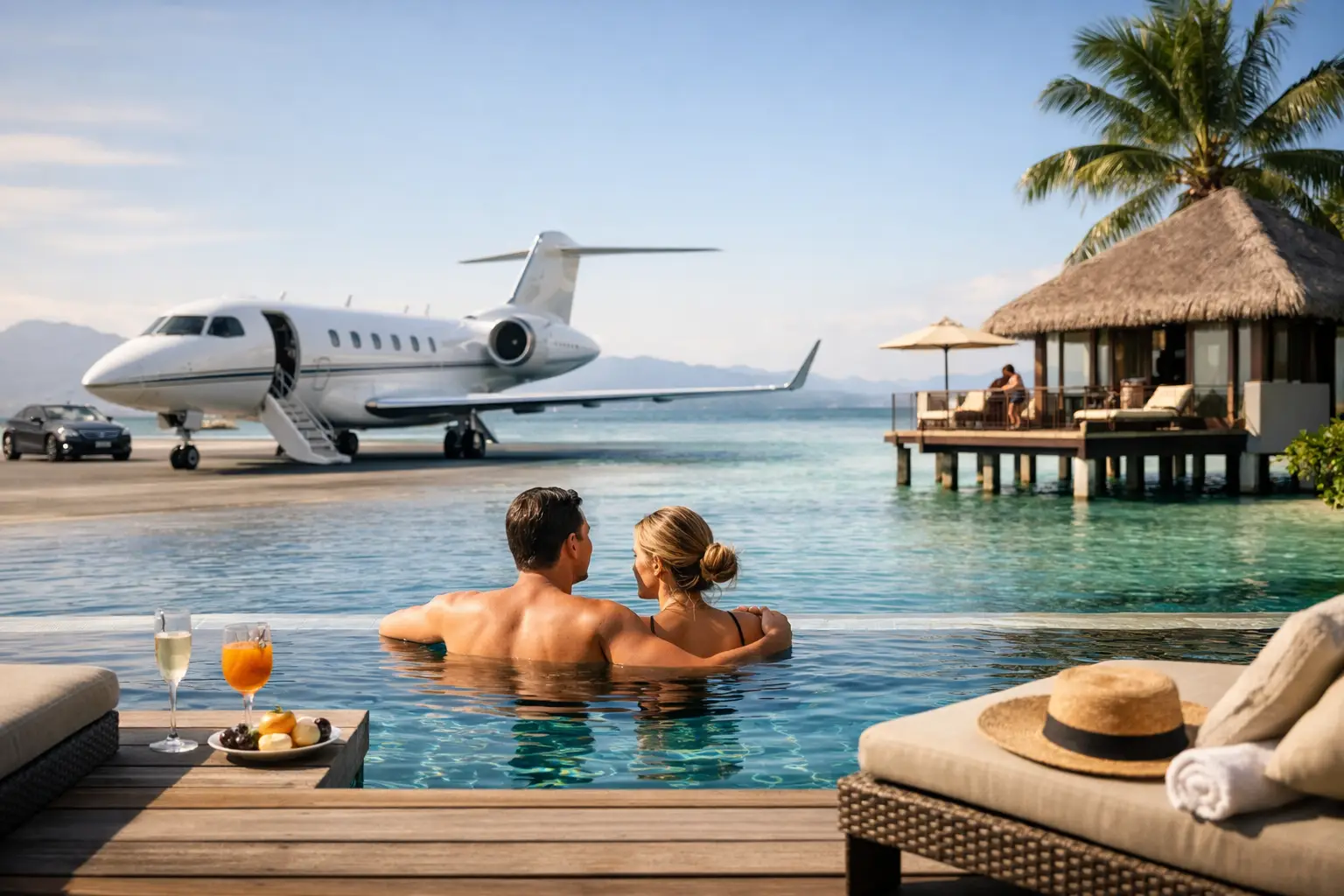

A $1,500-a-night hotel room is no longer the clearest signal of luxury. For affluent travelers, the value proposition is increasingly measured in access, privacy, flexibility, and time saved. The luxury travel trends shaping demand now are changing where high-income households spend, how travel companies invest, and which premium brands can protect pricing power when consumers become more selective.
That shift matters beyond the lifestyle pages. Travel is a major discretionary category, and premium customers have become a crucial profit engine for airlines, hotel operators, cruise lines, private aviation firms, and luxury advisors. Even when broad consumer spending weakens, the top end of the market can hold up better. But it is not immune to economic pressure. High interest rates, equity-market volatility, currency swings, and geopolitical uncertainty are forcing travelers to ask a sharper question: is this trip genuinely worth the premium?
Luxury Travel Trends Put Experience Ahead of Excess
The old model of luxury travel leaned heavily on visible markers: larger suites, marquee addresses, and first-class cabins. Those still matter, but affluent travelers are putting more weight on experiences that are difficult to replicate or buy at the last minute. A private museum opening, a chef-led visit to a regional food producer, a conservation trip with field researchers, or guaranteed access to a sold-out sporting event can carry more appeal than another generic five-star stay.
For suppliers, that creates a different operating challenge. Hotels and travel advisors need local relationships, trained staff, and dependable logistics, not just upgraded furnishings. Scarcity has become a product. The brands most likely to win are those that can turn scarce access into a credible, well-run itinerary without making it feel manufactured.
This is also pushing travelers toward fewer, longer, more deliberate trips. Rather than booking several short luxury getaways, some households are concentrating spending on one major international journey with family or friends. That can raise the total value of a single booking while making trip planning more complex. Larger villas, multigenerational accommodations, private guides, and custom transportation benefit from this pattern.
Privacy Has Moved From Perk to Product
Privacy was once a bonus for a narrow group of ultra-wealthy travelers. It is now a wider premium-market expectation, especially among executives, public-facing professionals, and families traveling with children. Demand is supporting private terminals, charter flights, villa rentals, small-ship itineraries, and hotels with controlled access and highly personalized service.
Private aviation illustrates both the opportunity and the trade-off. It can replace crowded airports and rigid schedules with speed and control, particularly on routes with limited nonstop service. Yet operating costs remain high, and environmental scrutiny is intensifying. For many affluent travelers, fractional ownership, jet cards, and shared private flights offer a middle ground, but they do not erase the cost or emissions debate.
Commercial airlines are responding in their own way. Rather than treating premium cabins as a simple upgrade, carriers are investing in enclosed suites, dedicated lounges, chauffeured transfers in select markets, and premium-economy products that capture travelers willing to pay more without committing to the highest fare. That middle tier may prove especially important if corporate travel budgets remain disciplined while personal travel stays resilient.
The Hotel Battle Is Moving Beyond the Room
Luxury hotel brands are competing on the full stay, from airport arrival to the last dinner reservation. The room remains central, but hotels are seeking more revenue from spas, restaurants, private excursions, wellness programming, and residential-style inventory.
This strategy has clear financial logic. A guest who books a suite and spends heavily on property amenities can generate materially more revenue than a standard room reservation. It also gives hotels more control over the guest experience than they have when travelers book activities through outside platforms.
The risk is overreach. Travelers are quick to notice when a destination fee, wellness add-on, or exclusive experience feels like a markup without substance. Luxury pricing holds when service is intuitive and distinctive. It weakens when every interaction feels engineered to produce another charge.
Wellness Travel Is Becoming More Specific
Wellness remains one of the most durable luxury travel trends, but the category is moving beyond broad promises of rest and renewal. Travelers increasingly want programs built around a defined goal: better sleep, fitness recovery, stress management, nutrition, menopause support, or preventive health screening.
That specificity is attracting investment from resorts, medical providers, and hospitality groups. A destination with credible practitioners, diagnostic tools, and follow-up support can charge far more than a traditional spa hotel. It also speaks to a wealthier customer base that sees health spending as part of long-term financial planning.
Still, the category requires caution. Hotels should distinguish clearly between evidence-based medical services and softer wellness offerings. Consumers should do the same, particularly when a travel package makes ambitious claims about health outcomes. A beautiful setting and premium price do not guarantee clinical quality.
Smaller Ships and Remote Destinations Gain Ground
Crowding has become a major luxury turnoff. That is helping expedition cruises, river itineraries, remote lodges, and lesser-known regional destinations gain attention. Travelers are often willing to pay a premium to avoid long lines, packed resorts, and the sense that a destination has been overwhelmed by its own popularity.
Small-ship cruising has benefited because it combines convenience with access to ports and landscapes that larger vessels cannot reach. The appeal is particularly strong for travelers who want an organized trip but have little interest in the scale of a conventional cruise vacation. Operators, however, face high fuel costs, limited capacity, and growing pressure to demonstrate more responsible environmental practices.
Remote travel brings its own contradiction. The places that feel most exclusive are frequently ecologically sensitive and dependent on small local communities. Luxury operators that limit guest numbers, hire locally, and fund conservation can protect both their brand and the destination. Those that simply market isolation risk accelerating the overcrowding they promise to help travelers escape.
Loyalty Is Being Tested by Higher Prices
Travel companies have spent years building loyalty ecosystems around points, elite status, and co-branded credit cards. In the luxury segment, those programs remain influential, but rising room rates and tighter award availability are testing customer patience. A traveler who cannot use points when it matters may view the program less as a benefit and more as a marketing tool.
For premium brands, the answer is not necessarily to make every luxury redemption cheap or easy. Scarcity is part of the business model. But the value exchange has to remain credible. Priority access, confirmed upgrades, flexible cancellation policies, and meaningful recognition can matter as much as a discounted room night.
Travel advisors are also gaining ground in this environment. High-net-worth travelers may be comfortable researching destinations online, but they are often willing to pay for someone who can solve disruptions, open doors, and coordinate complicated itineraries. Artificial intelligence can speed up research and personalize recommendations, yet it cannot fully replace trusted human relationships when a flight is canceled or a private transfer fails to arrive.
What This Means for Travelers and Investors
The premium travel market is not moving in one direction. Value-conscious luxury travelers will trade a famous city-center hotel for a more distinctive property outside the core, fly business class instead of private, or travel in shoulder season to preserve the overall experience. Ultra-wealthy travelers, meanwhile, may place even greater value on anonymity, space, and truly limited access.
For investors, that favors companies with differentiated assets, strong service cultures, and the ability to generate revenue beyond the nightly room rate or seat fare. It is less favorable for operators relying on generic luxury branding while costs rise and consumers become more demanding.
The best question for a traveler is not whether a trip looks expensive. It is whether the premium buys something that protects the one resource no itinerary can replenish: time.