
A Federal Reserve rate decision can move markets within seconds, but its effect on a household budget or a company’s hiring plan usually takes months. What happens when interest rates rise is not one clean, immediate chain reaction. It is a broad repricing of money that changes who can borrow, what investors will pay for future profits, and how quickly the economy can grow.
The Federal Reserve typically raises its benchmark federal funds rate when inflation is running too hot or demand appears to be outpacing the economy’s capacity to produce goods and services. Higher rates are meant to cool spending and borrowing. That can relieve price pressures, but the trade-off is slower economic activity and, in some cases, weaker employment.
What Happens When Interest Rates Rise Across the Economy
The first move is at the center of the financial system. When the Fed raises its policy rate, it becomes more expensive for banks to borrow short-term funds. Banks, credit-card issuers, auto lenders, and other financial institutions often pass at least part of that higher cost to customers.
The result is higher interest rates on many forms of variable-rate debt and new loans. Consumers may delay a car purchase, carry less credit-card debt, or decide against moving. Businesses may shelve an expansion, postpone equipment purchases, or rethink an acquisition financed with debt. Those individual decisions add up to slower demand.
The effect is not uniform. Fixed-rate borrowers are often insulated until they need to refinance, while people with variable-rate loans can feel the change quickly. Large companies with cash reserves and long-term, fixed-rate debt may manage comfortably. Smaller businesses that depend on revolving credit lines can face more immediate pressure.
Rate increases also operate with a lag. Financial markets can adjust on the day of a policy announcement, but changes in rents, payrolls, capital spending, and consumer behavior can take several quarters to become clear. That delay is why central banks face a difficult balancing act: act too slowly and inflation may become entrenched; act too aggressively and the economy can contract more sharply than intended.
Borrowing Gets More Expensive for Households
For many Americans, the most visible consequence is a higher monthly payment on debt.
Credit cards are especially sensitive because most carry variable annual percentage rates tied, directly or indirectly, to benchmark rates. A rate increase may not change a cardholder’s balance, but it raises the cost of carrying that balance from one month to the next. The impact is largest for households already paying only the minimum.
Auto loans, personal loans, private student loans, and home-equity lines of credit can also become more expensive for new borrowers. The exact pass-through depends on lender competition, borrower credit quality, loan terms, and broader conditions in the bond market. A Fed hike does not automatically produce an equal increase in every consumer loan rate.
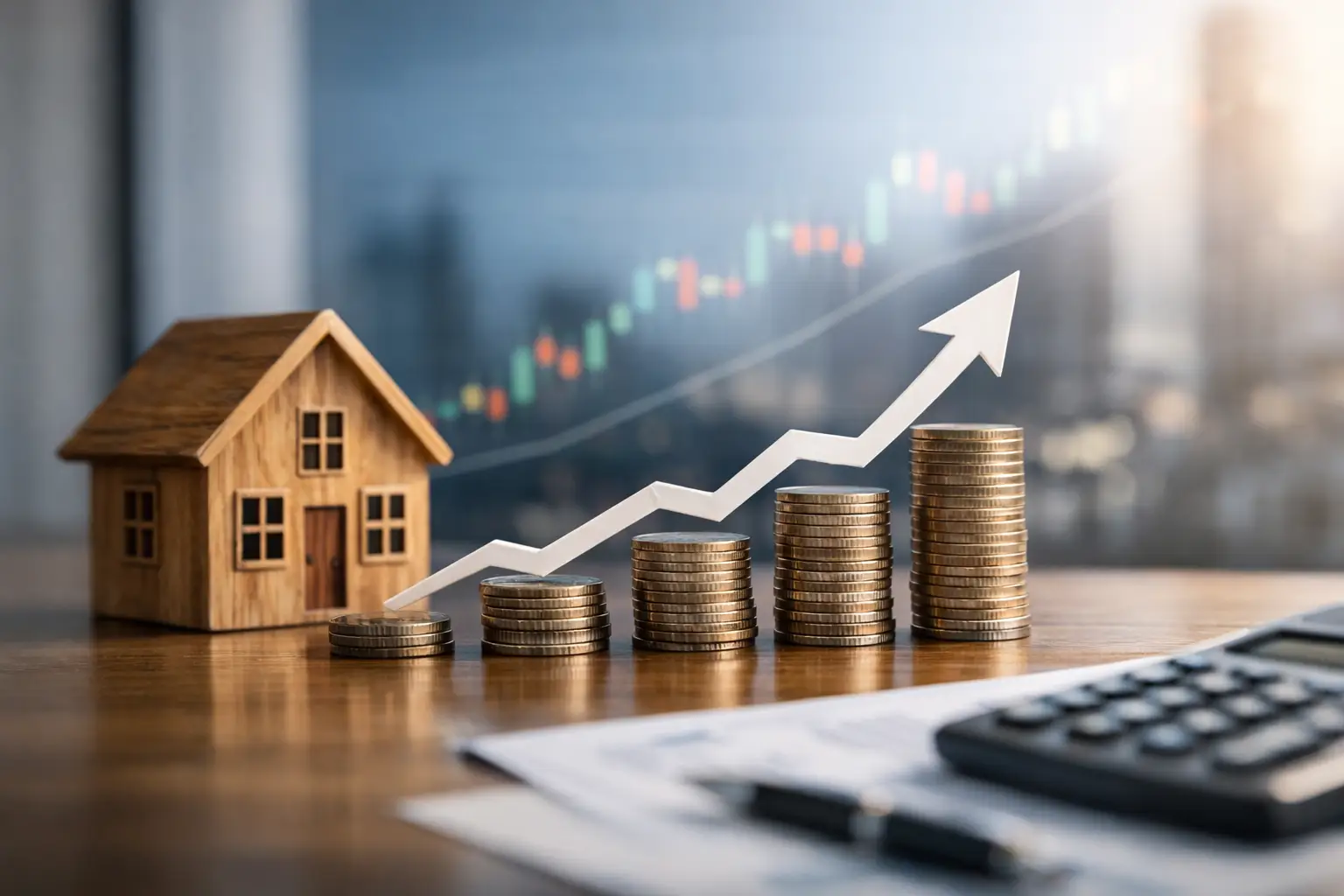
Mortgage rates deserve a distinction. They are influenced by longer-term Treasury yields and mortgage-backed securities, not simply the Fed’s overnight rate. Still, expectations for Fed policy strongly influence those markets. When mortgage rates rise, buyers qualify for smaller loans at the same income level, which can reduce purchasing power by tens of thousands of dollars in high-cost markets.
That dynamic often cools home sales and new construction. Sellers may hesitate to list because they do not want to give up an existing low-rate mortgage, limiting inventory even as demand weakens. Housing can therefore slow in uneven ways: prices may flatten or fall in some markets, while tight supply keeps them resilient in others.
Savers Can Finally Earn More, but Not Always Enough
Higher rates are not purely negative for consumers. Savers can benefit as yields rise on high-yield savings accounts, certificates of deposit, money-market funds, and newly issued Treasury bills and bonds.
That matters for retirees and conservative investors who rely on income rather than rapid asset appreciation. After years of near-zero rates, a higher-yield cash position can become a meaningful part of a portfolio strategy.
But the gain must be measured against inflation. A savings account yielding 4% does not increase purchasing power if prices are rising faster than 4%. And banks do not always raise deposit rates as quickly as they raise lending rates. Shopping around can make a material difference, particularly for cash that is sitting in an account paying a minimal yield.
Stocks and Bonds Reprice Future Returns
Markets often react before the broader economy does. Higher rates raise the return investors can earn with relatively low-risk assets such as short-term government securities. That changes the math for stocks, private equity, real estate, and other riskier investments.
For stocks, the key issue is the value of future earnings. When interest rates rise, investors use a higher discount rate to calculate what profits expected years from now are worth today. Growth companies, especially those whose earnings are projected far into the future, can be particularly vulnerable. Technology stocks may therefore face sharper valuation swings than mature companies with steady cash flow and dividends.
That is not a rule that applies to every company. Banks can benefit from higher rates when they earn more on loans than they pay on deposits, although the advantage can fade if deposit costs rise quickly or loan losses increase. Energy, consumer staples, health care, and industrial companies each respond differently depending on demand, pricing power, debt levels, and economic conditions.
Bond investors face a more direct relationship: when newly issued bonds offer higher yields, the market price of existing lower-yield bonds generally falls. Longer-duration bonds tend to be more sensitive because their cash flows are further in the future. That can create paper losses for investors who sell before maturity, even though a bond held to maturity may still pay its stated principal, assuming the issuer does not default.
Businesses Pull Back When Capital Costs Rise
Interest rates are a cost of doing business, not just a personal-finance issue. A company planning a new factory, data center, hotel, warehouse, or software rollout evaluates whether the expected return exceeds its cost of capital. Higher borrowing costs can turn a marginal project into one that no longer makes financial sense.
Highly leveraged sectors are often under the most scrutiny. Commercial real estate owners, homebuilders, private-equity-backed firms, utilities with major infrastructure needs, and early-stage technology companies can all feel pressure when refinancing debt. Companies with debt maturing soon may be forced to replace low-cost loans with significantly more expensive financing.
Corporate earnings can suffer through several channels at once: interest expense rises, customer demand cools, and investors become less willing to fund losses in pursuit of distant growth. Management teams may respond by reducing inventory, slowing hiring, cutting discretionary spending, or delaying expansion plans.
Those choices are rational at the company level, but if they happen across many industries, they can weaken the labor market. Job openings may decline before layoffs rise. Wage growth can cool as employers gain more leverage in hiring. A gradual slowdown is the hoped-for outcome of restrictive monetary policy; a recession is the risk if spending and investment retreat too far.
The Dollar, Global Trade, and Emerging Markets Can Feel It Too
U.S. rate increases can have global consequences because the dollar sits at the center of trade, commodities, and finance. Higher U.S. yields can attract global capital into dollar-denominated assets, strengthening the dollar against other currencies.
A stronger dollar can make imported goods cheaper for U.S. consumers, which may help contain inflation. But it can also make American exports more expensive abroad and reduce the value of overseas revenue when U.S. multinationals convert it back into dollars.
For emerging markets, the challenge can be more severe. Countries and companies with dollar-denominated debt must find more local currency to service the same obligations when their currencies weaken. Capital can leave riskier markets as investors seek higher returns in the United States, putting pressure on exchange rates, central banks, and government budgets.
What to Watch After a Rate Hike
The headline rate is only one signal. Investors, business owners, and consumers should watch whether inflation is easing, how unemployment claims and payroll growth are changing, and whether consumer spending remains durable. The Treasury yield curve also matters because it reflects market expectations for future growth, inflation, and Fed policy.
For households, the practical response is usually more valuable than trying to predict the next meeting. Review variable-rate debt, compare savings yields, avoid stretching a housing budget based on the assumption that rates will quickly fall, and understand when any major loan will reset or mature.
For investors, higher rates are a reminder to look beyond market narratives. Cash flow, debt maturity schedules, pricing power, and valuation matter more when capital is no longer cheap. The next rate move may dominate the news cycle, but the more useful question is whether your financial decisions can hold up if borrowing stays expensive longer than expected.