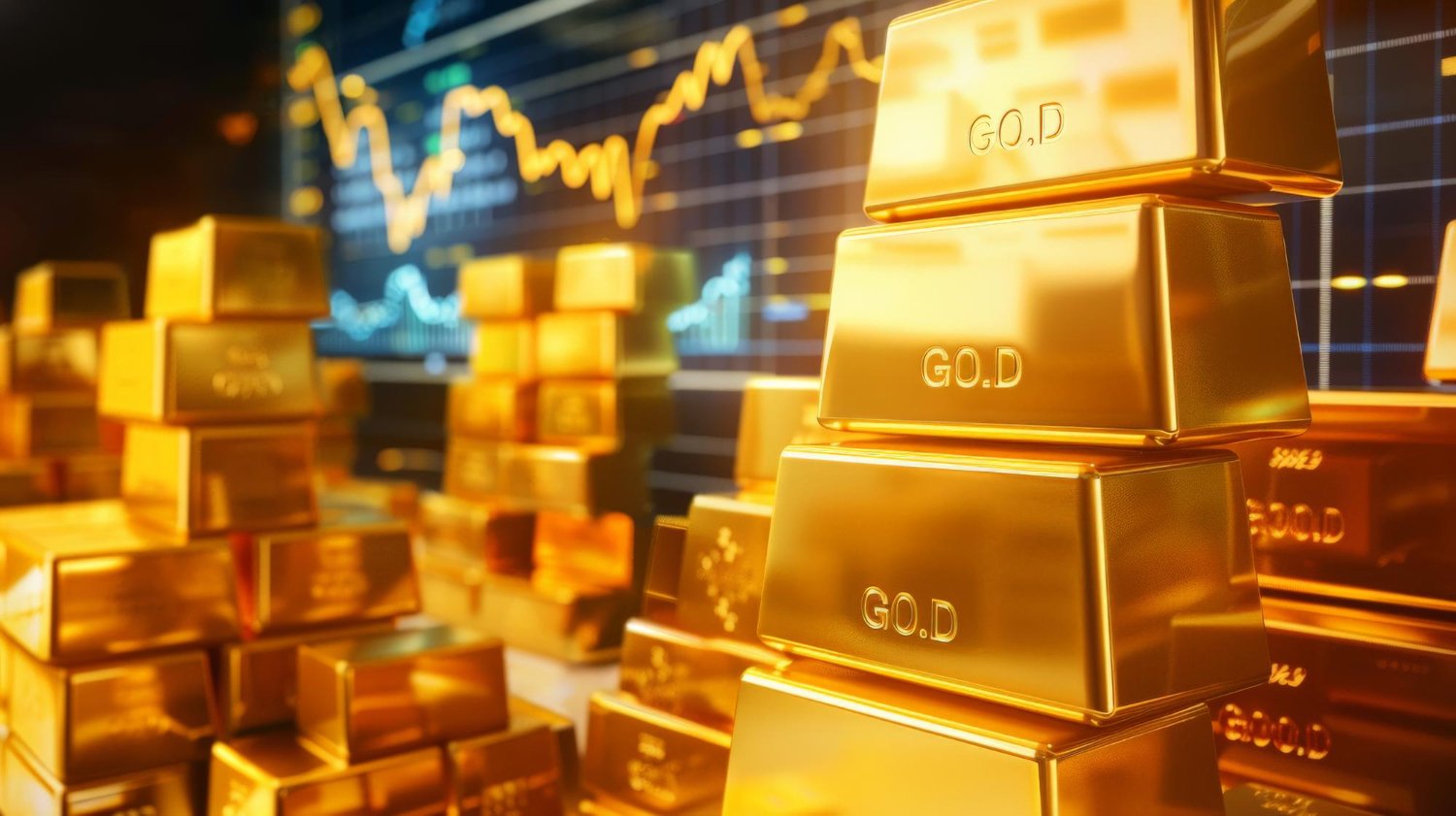

Gold hovered around $5,000 per ounce on Wednesday, trading close to its lowest level in a month as investors weighed inflation risks tied to volatile oil prices ahead of the Federal Reserve’s highly anticipated monetary policy decision.
Despite recent downward pressure, the precious metal remains one of the year’s top-performing assets, gaining approximately 16% year-to-date amid persistent geopolitical and macroeconomic uncertainty.
Federal Reserve in Focus as Inflation Risks Resurface
Markets widely expect the Federal Reserve to keep interest rates unchanged in its latest decision. However, investor attention is centered on forward guidance, particularly regarding how rising energy prices may influence the inflation outlook and future policy direction.
At the same time, signs of a cooling U.S. labor market are adding complexity to the Fed’s positioning, as policymakers balance inflation control with economic stability.
Other major central banks—including the European Central Bank (ECB), Bank of England (BoE), and Bank of Japan (BoJ)—are also expected to maintain current policy settings, reinforcing a globally cautious monetary stance.
Geopolitical Escalation Reinforces Safe-Haven Demand
Geopolitical tensions continue to underpin gold’s broader upward trend. Overnight, the United States and Israel carried out additional strikes, while Iran confirmed the death of Ali Larijani, its national security chief, following earlier Israeli reports of a targeted airstrike.
Iran has simultaneously intensified attacks on energy infrastructure across the Persian Gulf, further destabilizing the region and raising concerns over global energy supply chains.
Shipping through the Strait of Hormuz remains largely disrupted, amplifying risks across commodity markets and reinforcing gold’s role as a safe-haven asset during periods of heightened uncertainty.
Oil Volatility and Market Sentiment Drive Short-Term Moves
Fluctuations in oil prices have become a key driver of near-term gold price action. Rising energy costs are fueling renewed inflation concerns, which could delay potential monetary easing and impact the trajectory of non-yielding assets like gold.
The interplay between inflation expectations, central bank policy, and geopolitical instability continues to define investor sentiment across global markets.
Outlook: Gold Positioned Between Policy Signals and Global Risk
While gold has retreated from recent highs, its strong year-to-date performance highlights sustained demand for defensive assets. The next phase for gold will likely depend on signals from the Federal Reserve, the evolution of energy markets, and the trajectory of geopolitical tensions in the Middle East.
Investors are expected to remain highly attentive to policy guidance and macroeconomic indicators as they reassess positioning in an increasingly complex global environment.