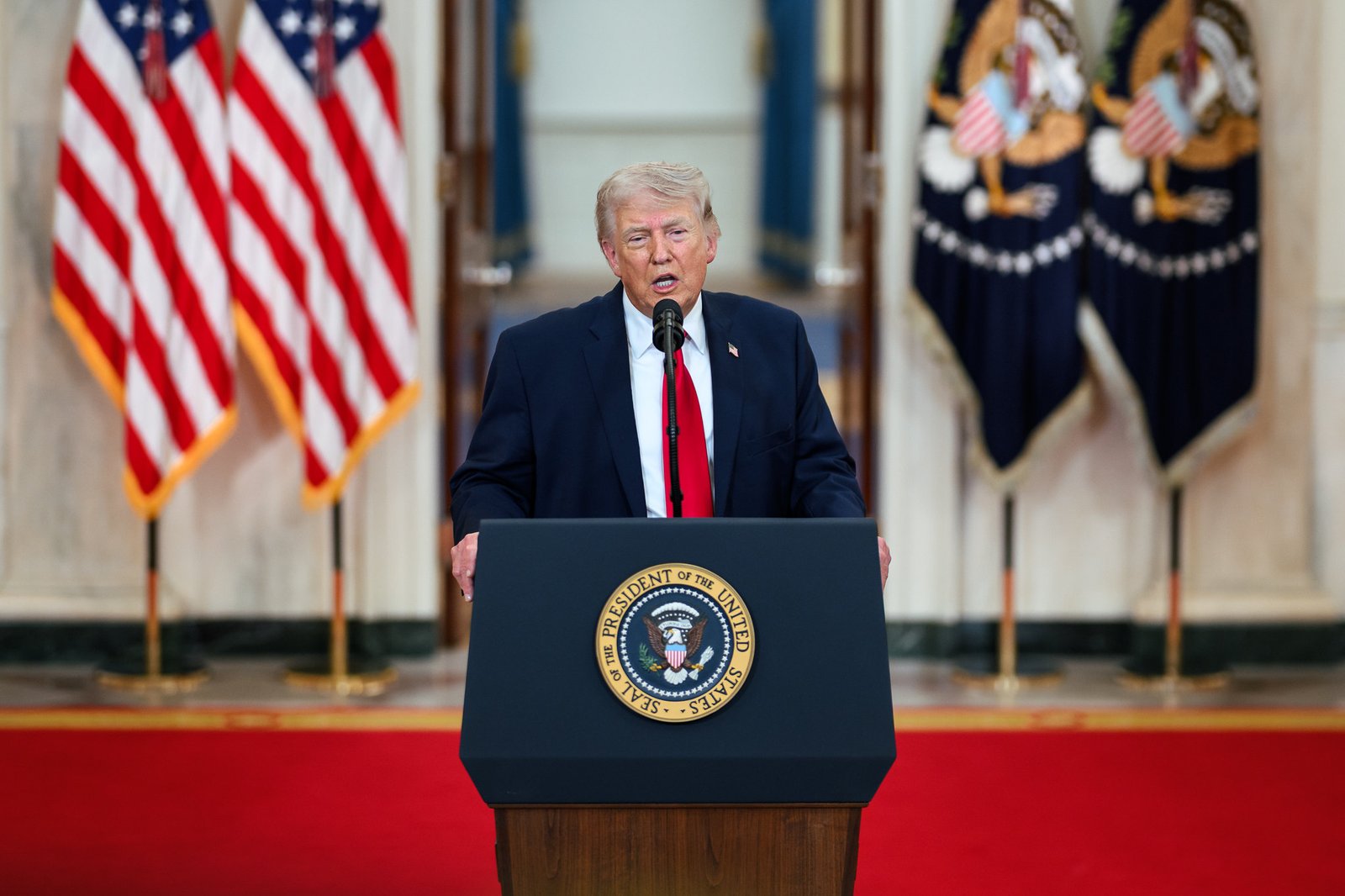

The White House said President Donald Trump announced that Israel and Lebanon have agreed to a 10-day ceasefire, a move that could create diplomatic space for broader negotiations involving Iran.
According to reporting from Reuters and Bloomberg, the temporary truce is being framed by U.S. officials as a confidence-building measure aimed at de-escalating regional tensions. The pause in hostilities could also serve as a strategic window for indirect discussions with Iran, particularly as Washington explores pathways to stabilize ongoing geopolitical frictions in the Middle East.
The ceasefire, set to last 10 days, comes amid heightened cross-border tensions between Israel and armed groups operating in southern Lebanon. While neither side has publicly detailed the full terms of the agreement, diplomatic sources cited by Reuters indicate that international mediators were involved in facilitating the arrangement.
Analysts note that even a short-term ceasefire carries significant geopolitical implications. Beyond reducing immediate military risk, the agreement may signal a recalibration of U.S. strategy in the region—leveraging localized de-escalation to unlock broader diplomatic engagement, including with Tehran.
However, risks remain elevated. Previous ceasefires between Israel and Lebanon have proven fragile, often collapsing under renewed hostilities or disagreements over enforcement mechanisms. The durability of this latest truce will likely depend on coordination among regional actors and the extent of external diplomatic pressure.
The development also highlights the increasingly interconnected nature of Middle East diplomacy, where bilateral de-escalation efforts are frequently tied to wider strategic objectives involving multiple state and non-state actors.