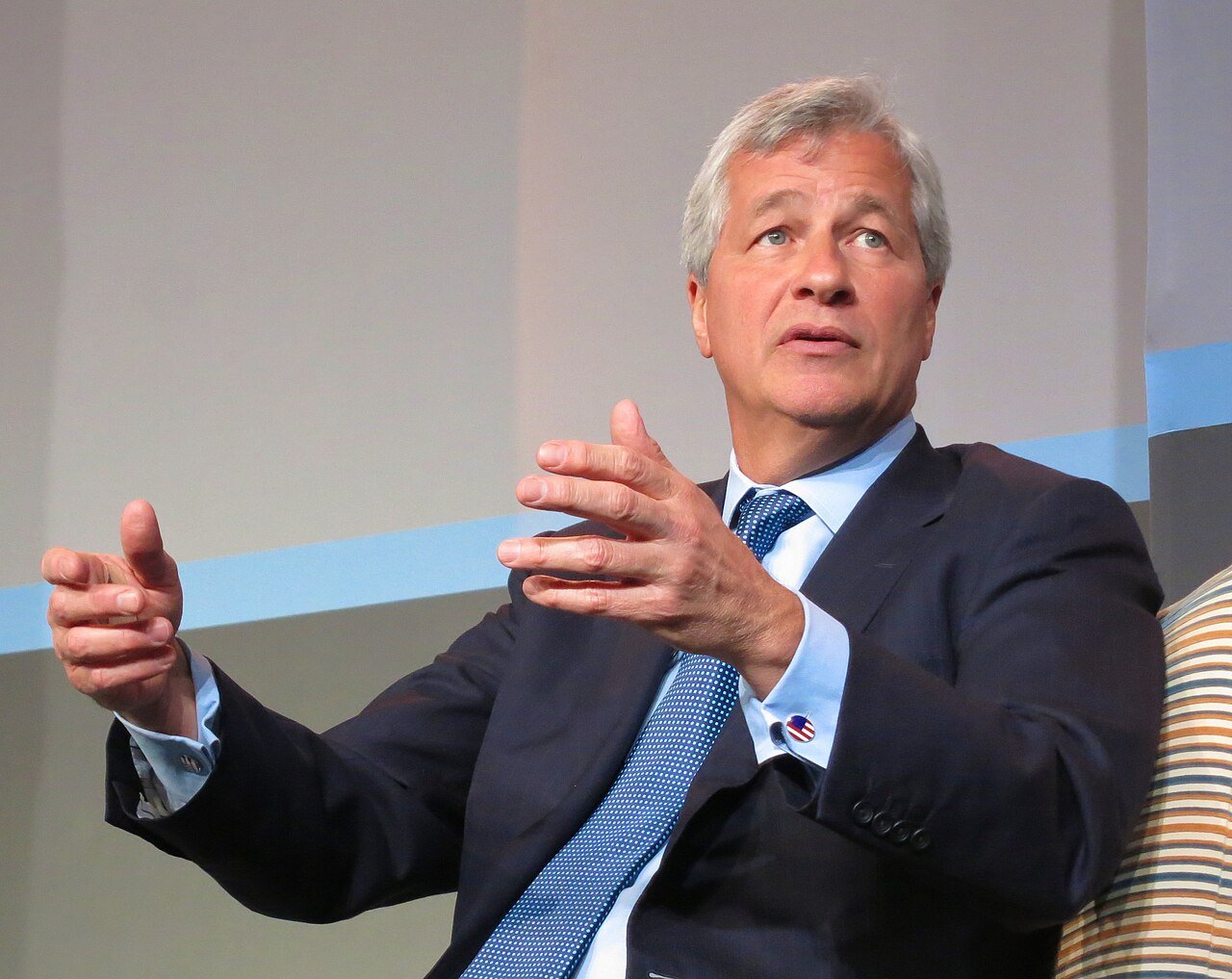
Jamie Dimon, CEO of JPMorgan Chase, has identified the ongoing conflicts in Iran and Ukraine as the most significant threats to global geopolitical stability, according to his annual letter to shareholders released Monday.
In the widely followed communication, Dimon underscores a complex and increasingly fragile global environment shaped by escalating geopolitical tensions, persistent inflationary pressures, and structural vulnerabilities within financial markets.
“Despite the unsettling landscape, the U.S. economy continues to be resilient,” Dimon said, pointing to sustained economic strength even amid mounting global uncertainty.
Geopolitics at the Center of Market Risk
Dimon emphasized that conflicts involving Iran and Ukraine are not isolated regional issues but systemic risks with the potential to reshape global capital flows, energy markets, and international alliances.
His remarks come at a time when investors are closely monitoring geopolitical developments as a primary driver of volatility across asset classes.
Inflation and Private Credit Under Scrutiny
The JPMorgan CEO also highlighted ongoing concerns around stubborn inflation, noting that price pressures remain more persistent than markets had initially anticipated.
Additionally, Dimon reiterated his long-standing skepticism toward private credit markets, describing segments of the space as potentially unstable, particularly in an environment of higher interest rates and tightening liquidity conditions.
Artificial Intelligence: A Transformational Opportunity
While addressing risks, Dimon pointed to artificial intelligence as a defining force for the future of business and economic productivity. He noted that AI has the potential to reshape industries, enhance efficiency, and drive long-term growth across sectors.
A Call for Strategic Leadership
As the United States approaches its 250th anniversary, Jamie called for a renewed commitment to the principles that have historically underpinned its global leadership.
He urged policymakers and institutions to reinforce the values and strategies that have sustained the country’s position within the international order, particularly in a period marked by geopolitical fragmentation and economic transition.