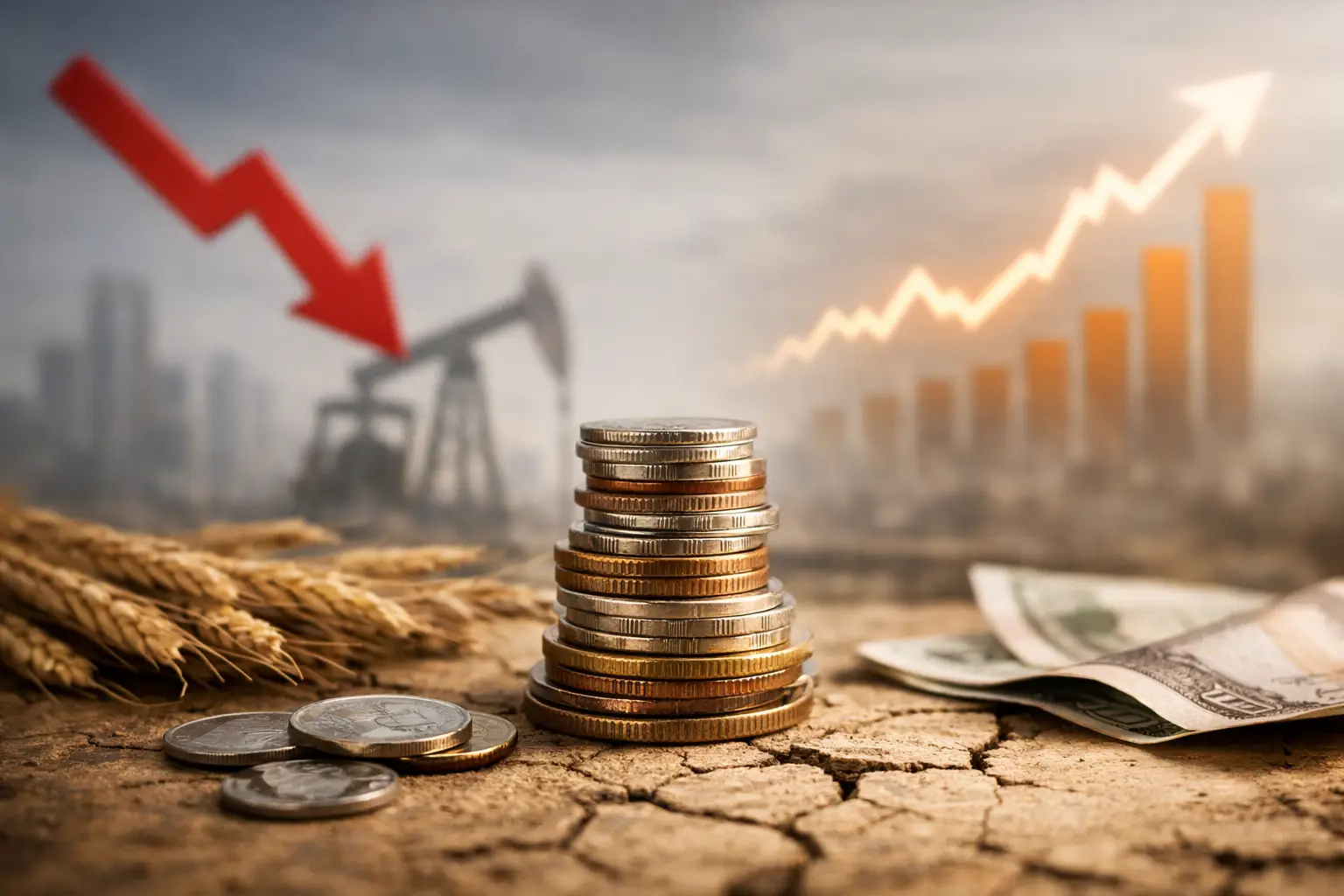

A rising grocery bill is painful. A rising grocery bill while job openings shrink, pay increases fade, and borrowing costs stay high is a different kind of economic problem. That is why the question, is stagflation bad, has a short answer: usually yes, because it combines two forces that households, businesses, investors, and policymakers would rather face separately – stubborn inflation and weak economic growth.
Stagflation is not simply an economy that feels expensive. It describes a period when prices are rising quickly while growth slows or stalls, often alongside a weakening labor market. The combination puts the Federal Reserve in a bind, pressures corporate profits, and leaves consumers with fewer easy adjustments.
Is Stagflation Bad for the Economy?
Stagflation is damaging because the standard responses to inflation and recession can pull in opposite directions. When inflation is too high, the Federal Reserve can raise interest rates to cool consumer demand, business borrowing, and wage pressure. When growth weakens sharply, central banks typically cut rates to support hiring, lending, and investment.
During stagflation, neither choice is clean. Rate increases can restrain prices but deepen an economic slowdown. Rate cuts can cushion growth but risk reigniting inflation expectations. That policy trade-off is the central reason markets treat stagflation as a serious risk.
For businesses, the problem often begins with costs. Energy, shipping, raw materials, and wages may climb even as customers become more price-sensitive. A company that cannot pass higher costs through to buyers sees margins narrow. A company that raises prices too aggressively may lose volume. Retailers, restaurants, manufacturers, airlines, and consumer brands can all face that squeeze, although the effect varies widely by sector.
The economy does not need to be in an official recession to experience stagflation-like pressure. GDP can still grow modestly while consumers feel poorer after inflation. What matters is whether price gains are outpacing income gains and whether economic momentum is deteriorating.
Why Stagflation Hits Households So Hard
Most households do not experience the economy through GDP reports. They experience it through rent, food, gasoline, insurance premiums, credit-card payments, and the availability of work.
High inflation reduces purchasing power. If a worker receives a 3% raise but essential expenses rise 5%, that household has effectively taken a pay cut. In a healthy expansion, stronger hiring can offset some of that pressure by giving workers more leverage to seek higher wages or move to better-paying jobs. Stagflation removes much of that cushion.
The burden is especially heavy for lower- and middle-income households, which generally spend a larger share of income on necessities. A jump in energy or food prices cannot easily be avoided. Higher-income consumers may delay a vacation, a vehicle upgrade, or a luxury purchase; families living closer to their monthly budget may cut savings, take on card debt, or postpone medical and home expenses.
Borrowers can also feel the impact quickly. If inflation remains elevated, interest rates may stay higher for longer. That raises the cost of mortgages, auto loans, business credit lines, and revolving credit-card balances. Homeowners with fixed-rate mortgages are partly insulated, but prospective buyers and renters facing tight housing supply may have little relief.
The 1970s Still Shape the Fear Around Stagflation
The term is closely associated with the 1970s, when the U.S. economy endured weak growth, high unemployment, and painful inflation. Oil shocks played a major role, raising energy costs throughout the economy. Loose policy decisions, wage-price dynamics, and inflation expectations also helped make price increases harder to contain.
The episode matters because it showed that inflation is not always caused by an overheating economy. Supply shocks can lift prices even as output and employment weaken. A disruption to oil supplies, global shipping routes, food production, or a major manufacturing hub can create similar pressure, though the scale and persistence may differ.
The Federal Reserve ultimately brought inflation down through aggressive interest-rate increases under Chair Paul Volcker in the early 1980s. The cost was a severe recession and high unemployment. That history explains why financial markets closely watch inflation expectations: once households and businesses start assuming prices will keep rising rapidly, they may change wages, contracts, and pricing behavior in ways that prolong the problem.
Still, comparisons with the 1970s should be made carefully. The U.S. economy is more service-driven, domestic energy production is materially different, and the Fed has spent decades building credibility around its inflation target. A period of sticky inflation and slowing growth does not automatically become a 1970s-style crisis.
What Stagflation Can Mean for Markets
Stagflation can be difficult for investors because the usual diversifiers may not work as expected. Stocks may struggle as revenue growth slows and profit margins come under pressure. Bonds can also face headwinds if inflation remains high and yields rise. That is a tougher setup than a standard downturn, when falling inflation often helps high-quality bonds gain value.
Market performance, however, is rarely uniform. Companies with pricing power, durable demand, manageable debt, and strong balance sheets may be better positioned than highly leveraged businesses or firms dependent on discretionary spending. Energy and commodity producers can benefit when input prices climb, though commodity markets are volatile and gains can reverse quickly if demand falls.
For consumers managing retirement accounts, the biggest danger is often reacting to unsettling headlines with wholesale portfolio changes. Selling diversified investments after markets fall can turn temporary volatility into permanent losses. At the same time, ignoring inflation risk is not a strategy. Cash may feel safe, but its purchasing power can erode quickly when prices rise faster than savings yields.
A more practical response is to review the basics: emergency savings, high-interest debt, near-term spending needs, portfolio concentration, and the amount of risk being taken relative to the time horizon. Someone planning to buy a home next year has different priorities from someone investing for retirement 25 years away.
The Signals That Matter Most
No single report declares stagflation has arrived. Economists and markets look for a pattern across several indicators: persistent inflation, cooling consumer spending, slower output, weaker hiring, rising unemployment, declining business investment, and worsening consumer confidence.
Energy prices deserve close attention because they can quickly affect transportation, manufacturing, food distribution, and household budgets. So do inflation expectations in consumer surveys and market measures. If expectations remain anchored, a temporary supply shock is less likely to become self-reinforcing.
Corporate earnings also offer an early read on the real economy. When executives report that customers are trading down, delaying purchases, or resisting price increases, investors can see demand pressure before it is fully reflected in national data. Conversely, continued wage growth and resilient services spending may signal that the economy is slowing without stalling.
What You Can Do if Stagflation Risks Rise
There is no perfect household hedge against an economy with weak growth and rising prices. But preparation is more useful than prediction. Build or replenish an emergency fund, especially if your industry is sensitive to layoffs or cyclical spending. Pay down high-rate credit-card debt where possible, since expensive revolving balances become more damaging when rates stay elevated.
Review recurring expenses with an eye toward flexibility. Fixed costs such as housing, insurance, and car payments are harder to reduce after income drops. Avoid assuming that a future rate cut will quickly make a variable-rate loan affordable. For investors, keep decisions tied to financial goals and diversification rather than to a single month of inflation data.
Stagflation is bad because it narrows the margin for error across the economy. But it is not a cue to freeze. The most useful move is to know where higher prices and weaker growth would hit your finances first, then make those pressure points less fragile before the next headline forces the issue.
—-
Disclaimer: Money In Focus is an informational and educational media platform and does not provide investment, financial, tax, or legal advice. Nothing in this article should be considered a personalized investment recommendation or a guarantee of future results. Investing involves risk, and readers should consult a qualified professional before making financial or investment decisions.