
A missile strike near a major shipping lane, a new tariff announcement, or an election result can change the market’s assumptions before Wall Street opens. Understanding how geopolitics affect stock markets means looking past the first red or green headline and asking a harder question: Which companies will see their costs, sales, access to raw materials, or financing conditions change?
Markets do not price political events in isolation. They price the expected economic consequences – from oil supply and shipping insurance to inflation, interest rates, consumer confidence, and corporate earnings. That is why the S&P 500 can sell off on a geopolitical shock one day and recover sharply the next. Investors are constantly reassessing both the scale of the disruption and how long it may last.
How Geopolitics Affect Stock Markets: The Main Channels
Geopolitical risk reaches stock prices through several connected channels. The fastest is uncertainty. When investors cannot reliably estimate the outcome of a conflict, sanction program, election, or trade dispute, they tend to demand a higher return for holding risky assets. That can push share prices lower even before the underlying damage shows up in an earnings report.
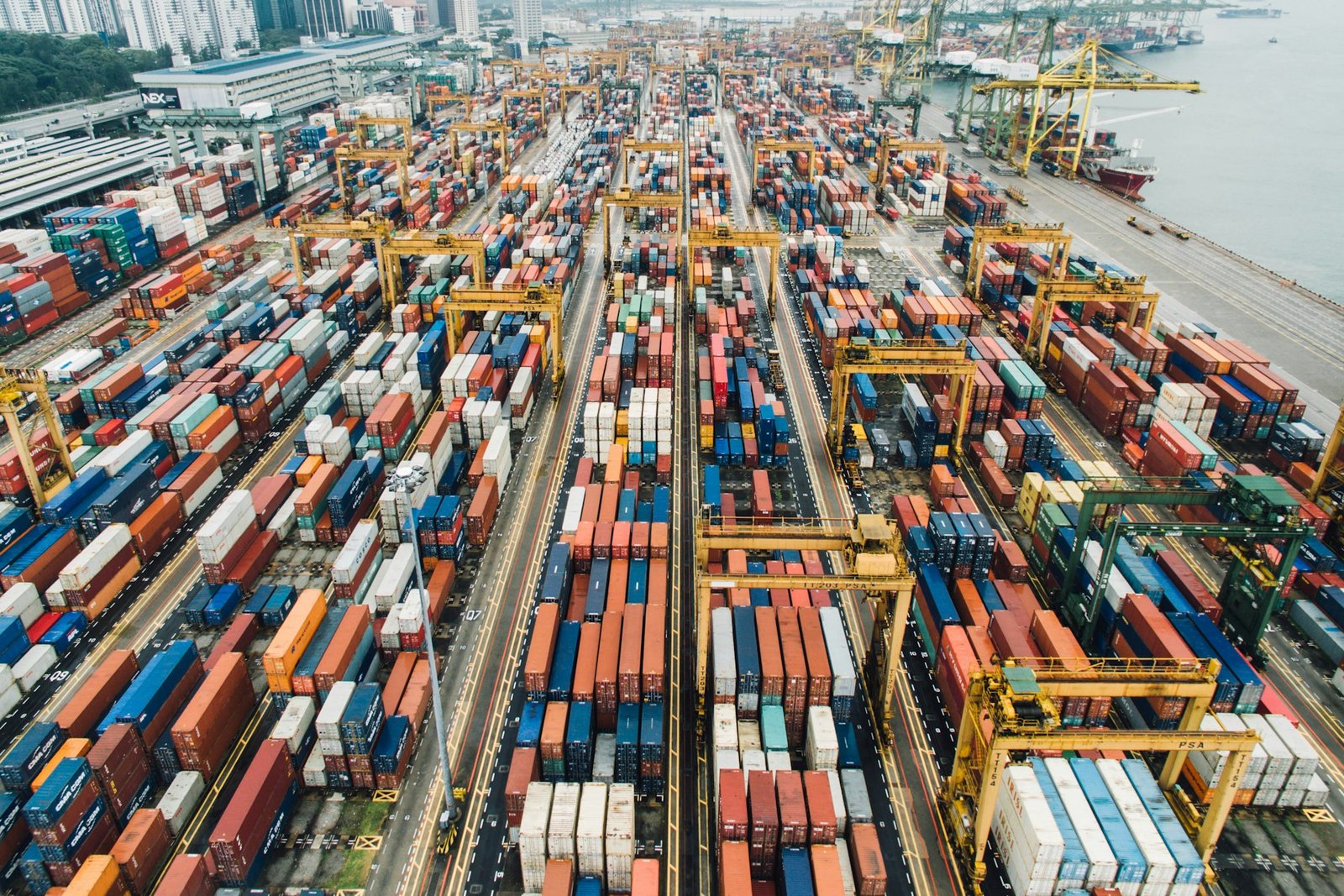
The second channel is the real economy. A conflict can restrict oil production, disrupt a sea route, damage infrastructure, or force governments to increase military spending. Trade restrictions can make imported components more expensive or block companies from selling into a major overseas market. Those developments affect revenue, margins, capital spending, and eventually valuations.
The third is monetary policy. If a geopolitical event drives energy or food prices higher, inflation can reaccelerate. The Federal Reserve may then have less room to cut interest rates, which matters especially for growth stocks whose valuations depend heavily on future earnings. A market shock that starts in crude oil or freight rates can quickly reach technology, housing, consumer spending, and bonds.
Energy Is Often the First Market Signal
Oil remains one of the clearest ways geopolitics moves financial markets. Tensions involving major producers, pipelines, refineries, or key shipping chokepoints can raise concerns about supply. Even a modest increase in crude prices can matter because energy feeds into transportation, manufacturing, airline costs, household budgets, and inflation expectations.
Higher oil prices may lift shares of energy producers and oilfield-service companies, while creating pressure for airlines, cruise operators, chemicals makers, trucking firms, and consumer-facing businesses. The outcome is rarely uniform. An integrated energy company with upstream production may benefit from higher crude prices, while a refiner may face a different set of margin pressures depending on fuel demand and supply conditions.
Natural gas, uranium, copper, and rare earth materials can produce similar market reactions. These resources are strategically concentrated in a limited number of countries, making supply chains vulnerable to political decisions. For companies building electric vehicles, power grids, data centers, semiconductors, or defense equipment, access to critical minerals is not a distant policy issue. It is an operating risk.
Trade Policy Can Redraw Corporate Winners and Losers
Tariffs, export controls, sanctions, and investment restrictions can reshape an industry faster than many investors expect. The direct target may be one country or product category, but the effects can spread across manufacturers, retailers, logistics firms, farms, and technology suppliers.
Consider a tariff on imported industrial goods. A U.S. producer that competes with those imports may gain pricing power. But a domestic manufacturer that uses the affected goods as inputs could see costs rise. If the company cannot pass those costs to customers, margins narrow. If it can pass them through, demand may weaken instead.
Technology is a particularly sensitive sector. Restrictions on advanced chips, chipmaking equipment, cloud infrastructure, and artificial intelligence capabilities can affect sales opportunities in overseas markets while encouraging new domestic investment. That can benefit selected equipment makers and construction firms, but it can also add compliance costs and create uncertainty for companies with global customer bases.
Investors should be cautious about broad claims that tariffs are simply good or bad for stocks. The impact depends on a company’s sourcing, pricing power, geographic revenue mix, inventory levels, and ability to shift production. Two companies in the same industry can experience the same policy decision very differently.
Wars and Sanctions Change Earnings Assumptions
Armed conflict brings obvious human costs, but markets focus immediately on the potential economic transmission. Is energy infrastructure at risk? Will shipping be rerouted? Could a regional conflict draw in larger powers? Will sanctions cut off a major exporter of metals, grains, fertilizer, or industrial materials?
Defense stocks can rise when governments signal larger procurement budgets, while aerospace suppliers, cybersecurity firms, satellite operators, and certain industrial companies may also see stronger demand. Yet investors should avoid treating conflict as a simple sector trade. Defense spending can take years to translate into contracts, production, and revenue. A stock that jumps on a headline may already reflect optimistic assumptions.
Sanctions create another layer of complexity. They can restrict a company’s access to markets, suppliers, banking systems, or joint ventures. Multinational companies may have to write down assets, redesign supply chains, or absorb higher compliance expenses. Banks and insurers can face elevated risks if payment systems, shipping routes, or counterparties become harder to assess.
Elections Matter When Policy Changes Are Credible
Elections often move markets because they can alter tax policy, regulation, trade rules, energy permitting, health care reimbursement, immigration, and fiscal spending. The market response is usually sharper when a candidate’s proposals are specific and when the likely path through Congress is clearer.
A shift toward larger deficits can raise questions about Treasury issuance, bond yields, and interest-sensitive stocks. Promises of deregulation may support parts of financial services, energy, and industrials, while tighter scrutiny of mergers or technology platforms can pressure affected companies. Health insurers, drugmakers, utilities, and renewable-energy companies can be especially responsive to changes in federal policy.
Still, markets frequently overreact to campaign rhetoric. Legislation takes time, courts can intervene, agencies shape implementation, and companies adapt. The relevant question is not whether an election outcome is politically dramatic. It is whether it changes the cash-flow outlook for publicly traded businesses.
Why Stock Markets Sometimes Recover Quickly
History shows that markets can absorb geopolitical shocks faster than headlines suggest. That does not mean the risks are unimportant. It means stock prices are forward-looking. Once investors believe a disruption is contained, that oil supply will continue, or that central banks can manage the inflation impact, the initial fear premium can fade.
The depth of the selloff usually depends on three factors: whether the event threatens global growth, whether it causes a sustained inflation shock, and whether financial markets themselves begin to malfunction. A localized conflict with limited effects on trade may create a short-lived move. A prolonged disruption to energy supplies or a major escalation between large economies can alter profit forecasts and rate expectations for much longer.
This distinction matters for individual investors. Selling after a sharp headline-driven decline can lock in losses just as markets begin to stabilize. Holding blindly is not always the answer either, particularly if a portfolio is concentrated in companies with direct exposure to a disrupted region, commodity, or supply chain.
What Investors Should Watch Beyond the Headline
The most useful indicators are often more practical than the political commentary. Watch crude oil and natural-gas prices, freight rates, the U.S. dollar, Treasury yields, inflation expectations, and credit spreads. These markets help show whether a geopolitical event is becoming an economic and financial stress event.
Then look at company-specific exposure. Earnings calls and regulatory filings can reveal how much revenue comes from a region, where a company sources critical inputs, how much inventory it holds, and whether management expects tariff or shipping costs to hit margins. A retailer reliant on low-cost imports faces a different risk profile than a software company with limited physical supply-chain needs.
Diversification remains useful precisely because geopolitical outcomes are difficult to forecast. Holding assets across sectors, regions, and investment styles can reduce the damage from a single shock. But diversification is not a guarantee: a severe energy spike or global trade disruption can affect nearly every corner of the market through inflation and slower growth.
For readers following fast-moving events, the disciplined approach is to separate the immediate market move from the longer earnings story. Geopolitical headlines are often loud. The durable investment signal is whether they change the price of energy, the flow of goods, the cost of capital, or the ability of businesses to grow.