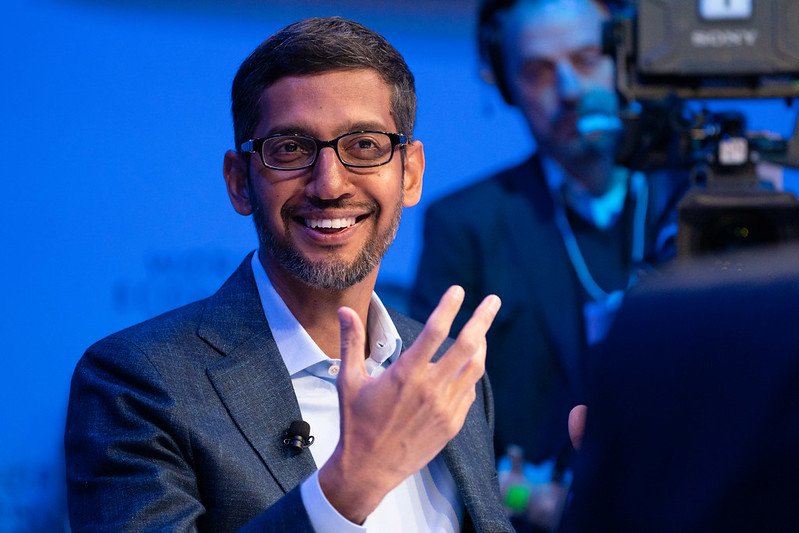
Alphabet Inc., the parent company of Google, has approved a new compensation package for CEO Sundar Pichai that could be worth up to $692 million over three years, according to documents first reported by the Financial Times and later highlighted by TechCrunch.
The majority of the package is performance-based and tied to stock incentives, meaning the full value will only be realized if the company meets specific operational and market milestones.
A significant portion of the incentives is linked to the growth of two of Alphabet’s emerging technology ventures: Waymo, the company’s autonomous driving division, and Wing, which focuses on drone-based delivery services.
The compensation structure reflects Alphabet’s broader strategy to reward leadership based on long-term value creation rather than short-term performance metrics. Analysts note that the company has increasingly emphasized next-generation technologies such as artificial intelligence, autonomous mobility, and logistics automation as key drivers of future growth.
Pichai has served as CEO of Google since 2015 and later became CEO of Alphabet Inc. in 2019. During his leadership, the company expanded aggressively into cloud computing, artificial intelligence, and advanced hardware ecosystems, helping push Alphabet’s market capitalization into the multi-trillion-dollar range.
Founders expand luxury real estate investments in Miami
At the same time, Google co-founders Larry Page and Sergey Brin have been making headlines for their recent luxury real estate purchases in Miami.
According to Business Insider, Brin is linked to the acquisition of a waterfront mansion worth approximately $51 million in Allison Island, Miami Beach, while Page has also been associated with multimillion-dollar property investments in the region.
The moves reflect a broader trend of technology billionaires increasingly investing in Florida’s high-end real estate market. Some analysts suggest the shift is partly influenced by ongoing discussions around a potential billionaire tax proposal in California, which has raised concerns among wealthy residents and entrepreneurs.
Strategic focus on future technologies
Alphabet’s decision to structure Pichai’s compensation around innovation-driven divisions underscores the company’s commitment to long-term technological leadership.
By tying executive incentives to projects such as autonomous vehicles and drone logistics, the board appears to be signaling that these emerging businesses could play a significant role in Alphabet’s next phase of growth.
If the full performance targets are achieved, the package could rank among the largest executive compensation agreements in the technology sector, reflecting both the scale of Alphabet’s ambitions and the strategic importance of leadership during a period of rapid transformation in the global tech industry.