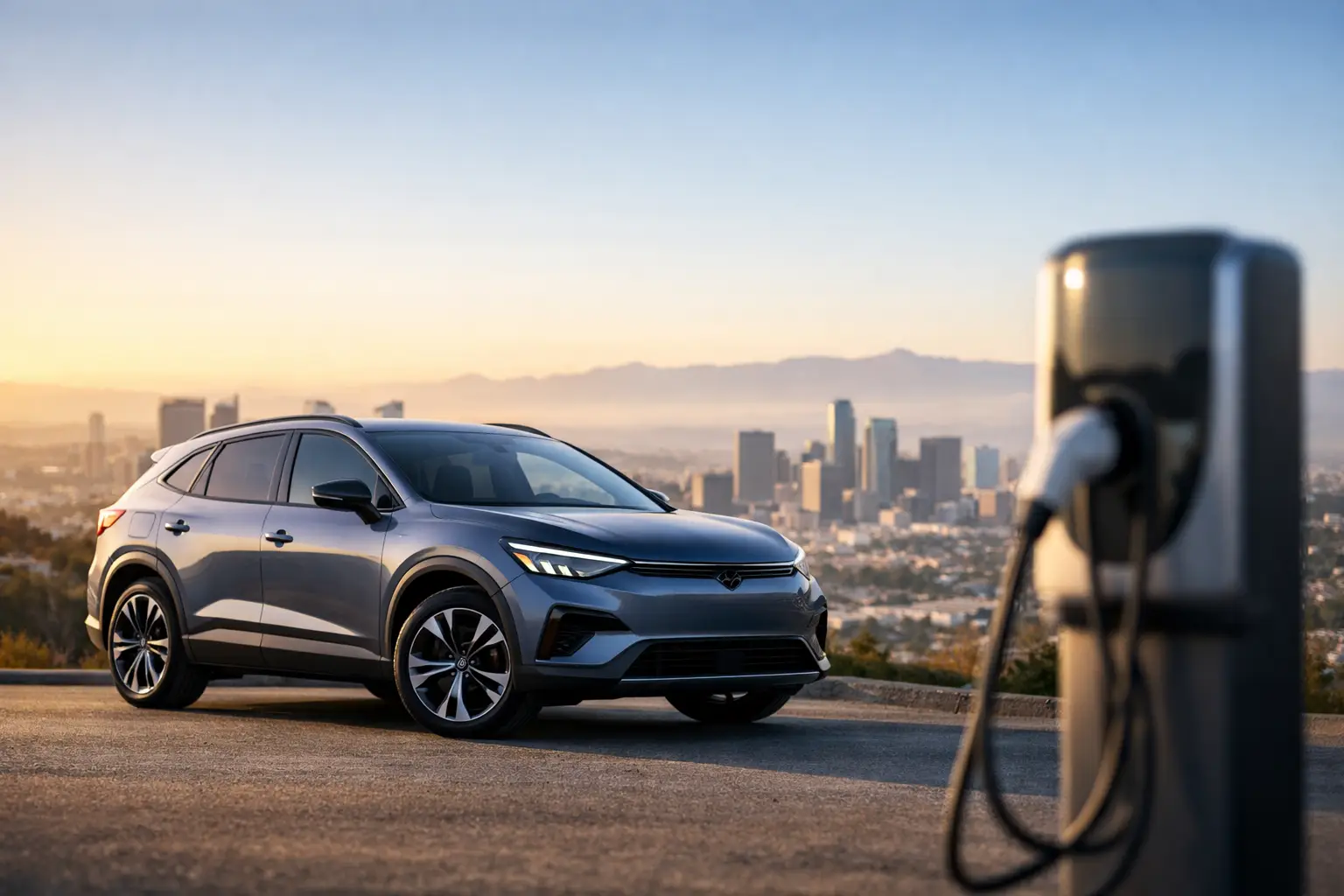

A useful electric SUV review starts well before the test drive. The purchase now sits at the intersection of household budgets, utility rates, federal tax rules, insurance costs, and a fast-moving auto market. For buyers replacing a gasoline crossover, the headline range figure matters. But the financial outcome will depend just as much on where the vehicle charges, how quickly it loses value, and whether its technology remains useful after the first year.
Electric SUVs have moved from a narrow premium category into one of the auto industry’s central battlegrounds. Tesla remains a major force, while Ford, General Motors, Hyundai, Kia, Rivian, Volkswagen, BMW, Mercedes-Benz, Volvo, and others are competing for buyers across nearly every price band. That competition has improved choice, but it has also created a market where a large sticker-price cut, a lease incentive, or a charging-network change can alter the value proposition quickly.
Electric SUV Review: The Decision Is Bigger Than Range
Range is the first number most shoppers see, and it is still a meaningful measure. A vehicle with an EPA estimate around 300 miles gives a household considerably more flexibility than one rated closer to 220 miles. Yet EPA range is a controlled benchmark, not a promise. Highway speeds, winter temperatures, roof boxes, steep grades, passengers, and aggressive climate control can reduce real-world distance materially.
For many U.S. households, a daily commute of 30 to 60 miles makes even a lower-range electric SUV workable if home charging is available. The calculation changes for apartment residents, frequent road-trippers, sales professionals, or families who routinely make long interstate drives. Those buyers should treat public charging access as part of the vehicle itself, not as a secondary convenience.
The most capable electric SUVs make a long trip feel predictable: they provide accurate charging-stop planning, show charger availability, precondition the battery before arrival, and maintain a healthy charging curve at fast chargers. A vehicle that can accept high peak charging power but rapidly slows down may be less convenient than one with more consistent performance between 10% and 80% battery capacity.
Charging Access Is a Personal Infrastructure Question
Home charging remains the strongest reason electric ownership works for many drivers. Plugging in overnight can turn the garage or driveway into a low-cost fueling station, particularly where off-peak utility rates are available. The upfront cost of installing a Level 2 charger varies sharply by electrical panel capacity, wiring distance, local labor rates, and permitting requirements. Buyers should get an installation quote before committing to a vehicle, not after delivery.
Without home charging, the ownership case becomes more conditional. Workplace charging can help, as can reliable public stations near a grocery store, gym, or regular route. But relying solely on public fast charging adds time and can erase much of the operating-cost advantage, especially in regions with expensive electricity. It also creates a practical question that no spreadsheet can fully solve: How much uncertainty are you willing to build into a normal week?
Network access is improving, including wider adoption of Tesla’s North American Charging Standard by other automakers. Still, access on paper is not identical to a dependable experience. Check which stations are compatible with the exact trim and model year under consideration, whether an adapter is needed, and how payment, routing, and service support work.
Price Cuts Changed the Value Calculation
The electric SUV market has seen significant price volatility as manufacturers pursue volume, manage inventory, and respond to rivals. That can benefit a new buyer, but it complicates resale values for owners who purchased at earlier prices. A vehicle discounted heavily today may be compelling to lease, while a similarly priced used model may require closer scrutiny if its original new-vehicle pricing was far higher.
Leasing deserves particular attention. The federal clean-vehicle tax credit has eligibility limits tied to vehicle price, buyer income, battery sourcing, and final assembly. Lease structures can sometimes provide a different route to manufacturer-applied incentives, although the benefit is not automatic and terms vary. The relevant number is the total lease cost, including the down payment, acquisition fee, mileage allowance, disposition fee, and buyout amount – not the monthly payment alone.
For a cash or financed purchase, compare the out-the-door price against comparable gasoline, hybrid, and plug-in hybrid SUVs. Then add the likely costs of insurance, home charging equipment, electricity, tires, registration, and interest. Electric SUVs generally require less routine maintenance because they do not need oil changes and have fewer mechanical components. They can, however, consume tires quickly because of their weight and instant torque, while collision repairs may be costly when specialized parts or battery inspections are required.
Insurance Can Surprise First-Time EV Buyers
Insurance quotes are a necessary pre-purchase check, not paperwork for later. Premiums depend on driver history and location, but some electric SUVs carry higher repair costs because battery packs, sensors, aluminum bodywork, and calibration procedures can make damage claims more expensive. Obtain quotes using the vehicle identification number or a dealer-provided stock number for the exact model, rather than assuming an EV will cost the same to insure as a similarly priced crossover.
Depreciation is equally important. Rapid technology gains and manufacturer price adjustments can pressure used values. That does not make an electric SUV a bad purchase. It means buyers who plan to trade within two or three years should be careful about paying for options with little resale appeal, such as oversized wheels that reduce range or niche performance upgrades that do not match their actual driving habits.
Which Electric SUV Fits Which Buyer?
The market is broad enough that the best choice depends less on brand loyalty than on use case. A compact model such as the Tesla Model Y, Hyundai Ioniq 5, Kia EV6, Ford Mustang Mach-E, or Volkswagen ID.4 may suit commuters and small families seeking a manageable footprint. Larger models, including the Kia EV9, Rivian R1S, Volvo EX90, Cadillac Escalade IQ, and Mercedes-Benz EQS SUV, target households that need three rows, towing capability, premium appointments, or substantial cargo space.
A buyer focused on value should look beyond the base MSRP. Some entry trims have the range needed for local driving but may omit heat pumps, advanced driver-assistance features, power liftgates, battery preconditioning, or charging hardware that matters in colder climates. Conversely, a top trim can add luxury without materially improving the daily ownership experience.
Performance also needs perspective. Many electric SUVs deliver acceleration once limited to high-end sports sedans, and that is enjoyable. It can also be unnecessary. The quickest version often costs more, rides more firmly, uses wider tires, and may carry a range penalty. For family duty, a comfortable ride, good visibility, rear-seat space, and predictable winter efficiency are usually more valuable than a sub-four-second sprint to 60 mph.
Technology Is an Asset, Until It Becomes a Distraction
Electric SUVs are increasingly software-defined products. Over-the-air updates can improve route planning, charging behavior, infotainment, and driver-assistance functions after purchase. That potential is a genuine advantage over older vehicles, but shoppers should separate future promises from features that work today.
Test the basics during a drive. Assess whether climate controls require multiple screen taps, whether phone integration is available, how clearly the navigation system estimates battery level on a route, and whether physical controls remain for tasks you perform constantly. A large display is not automatically better if it makes windshield defrosting or changing the fan speed harder while driving.
Driver-assistance branding also deserves a skeptical eye. Features such as adaptive cruise control and lane-centering can reduce fatigue on highway trips, but they require an attentive driver. No consumer electric SUV should be treated as self-driving simply because its marketing language sounds advanced.
The Bottom Line for Buyers
An electric SUV is at its strongest when it fits the owner’s charging reality and driving pattern, not when it wins a specification-sheet contest. A homeowner with overnight charging, a predictable commute, and occasional road trips may find the switch both cheaper and easier than expected. A renter without dependable charging or a driver who tows long distances through cold weather may be better served by a hybrid, a plug-in hybrid, or a carefully chosen EV with a larger battery and proven fast-charging performance.
Before signing, take the exact vehicle on a route that resembles your life, price its insurance, confirm charging compatibility, and run the ownership math with conservative assumptions. The best electric SUV purchase is not the one with the loudest launch event. It is the one that still makes financial and practical sense on an ordinary Tuesday in February.