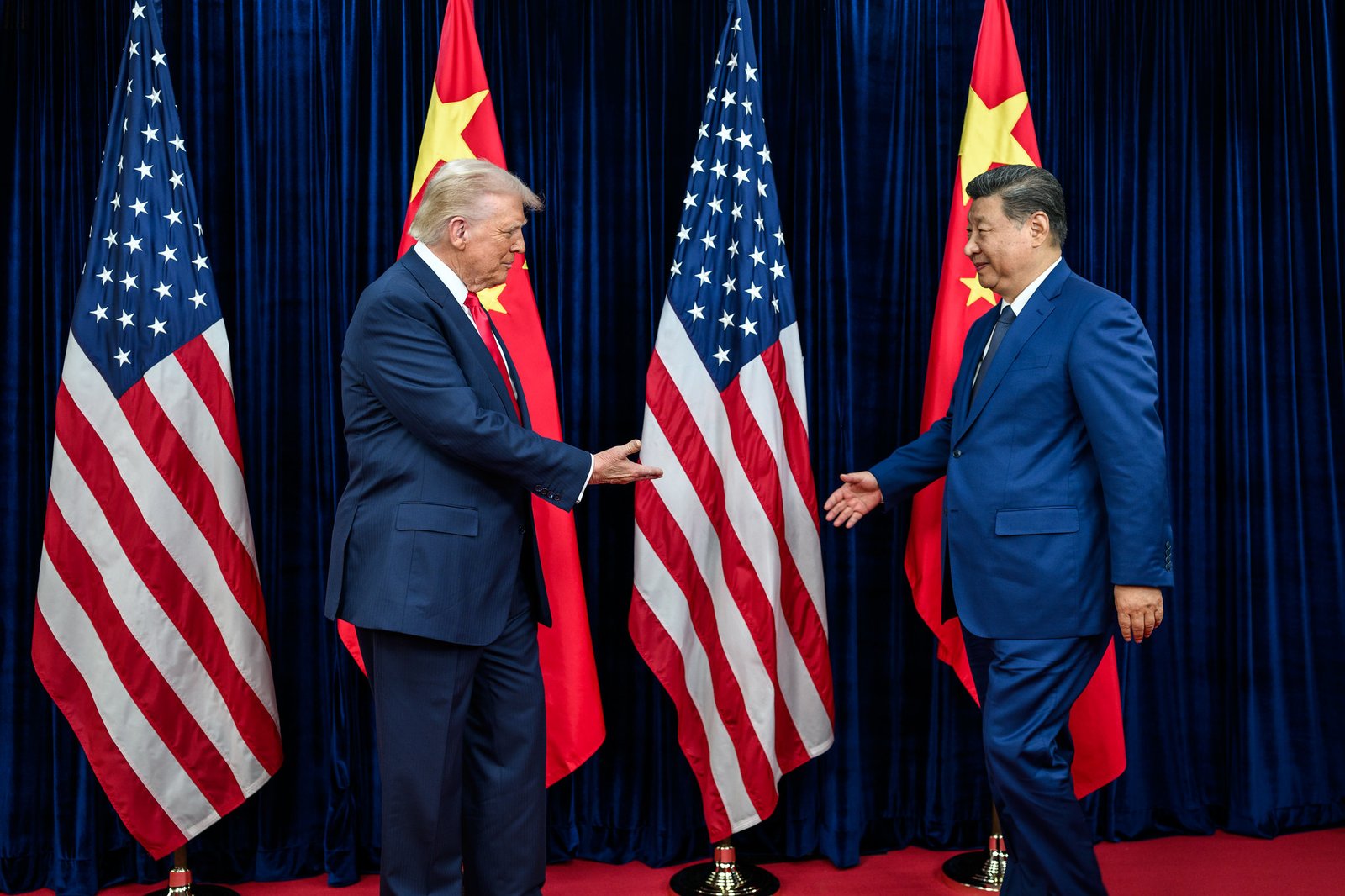
Australia’s 10-year government bond yield declined to approximately 4.72%, moving back toward its four-week low, as global markets reassessed risk following renewed tariff tensions initiated by U.S. President Donald Trump.
The pullback in yields reflects investor caution after President Trump announced that global tariffs will increase from 10% to 15%, following a U.S. Supreme Court decision that struck down significant portions of his earlier trade measures. The adjustment signals a recalibration of U.S. trade policy while maintaining a protectionist stance.
Australia Monitoring Trade Impact
Australian Trade Minister Don Farrell confirmed on Sunday that the government is coordinating closely with its embassy in Washington to evaluate potential economic impacts and explore all available options to protect national trade interests.
Australia’s export-driven economy remains particularly sensitive to shifts in global trade dynamics, especially amid rising geopolitical uncertainty and supply chain recalibrations.
RBA’s Hawkish Stance Limits Bond Rally
Recent economic data has reinforced the central bank’s position:
-
Strong labor market performance
-
Elevated fourth-quarter wage growth
-
Persistent inflation pressures
Earlier this month, the RBA implemented a rate hike, emphasizing that the economy appears capable of absorbing tighter monetary conditions without triggering significant job losses. The central bank continues to signal labor-market tightness and sustained price pressures as justification for its policy stance.
Inflation Data in Focus
Investors are now turning their attention to January inflation figures, scheduled for release later this week, which could provide further clarity on the trajectory of monetary policy and bond markets.
Market participants will be closely watching whether inflation data supports the RBA’s tightening bias or opens room for policy recalibration later this year.
Market Implications
The interplay between renewed U.S. tariff escalation and Australia’s firm domestic monetary policy stance presents a complex backdrop for global fixed-income investors. While geopolitical uncertainty typically supports bond prices, resilient domestic economic conditions may limit the extent of yield declines.
As global capital recalibrates in response to shifting trade dynamics and central bank positioning, Australia’s sovereign debt market remains a key barometer for Asia-Pacific risk sentiment.