
A labor shortage in a factory, a bottleneck in a distribution center, and a hospital’s need for more precise procedures may look like separate problems. They are increasingly feeding the same capital-spending cycle. The top robotics companies are no longer selling a futuristic promise alone. They are selling systems that can lift output, reduce errors, and keep operations running when hiring is difficult or expensive.
For investors, executives, and workers, robotics is also a more complicated story than a single stock-market theme. The sector spans mature industrial giants, fast-growing warehouse-automation specialists, surgical-device leaders, chip companies supplying the computing layer, and private startups still proving their economics. The winners will not necessarily be the firms with the most striking humanoid demonstrations. They will be the ones that can deploy reliable machines at scale, support customers for years, and turn installation backlogs into recurring revenue.
How to judge the top robotics companies
A useful way to assess robotics leaders is to look beyond the robot itself. The strongest businesses usually combine hardware, software, service contracts, customer relationships, and a deep understanding of a specific workflow. A welding robot, for example, becomes far more valuable when it is integrated with machine vision, safety equipment, production software, and local technical support.
That is why the market has several different leaders rather than one dominant robotics company. Industrial automation is driven by manufacturing investment. Warehouse robotics depends on e-commerce volumes, retail inventory strategies, and logistics labor costs. Medical robotics is shaped by hospital budgets, clinical outcomes, and regulatory approvals. Defense robotics follows government procurement cycles and geopolitical risk.
Scale matters, but so does exposure. A company with broad factory-automation sales may offer steadier demand across industries, while a specialist can deliver faster growth if its niche takes off. The trade-off is concentration risk: a slowdown in automotive production, warehouse construction, or elective surgery can quickly affect orders.
Top robotics companies shaping major markets
ABB, FANUC, and Yaskawa dominate industrial automation
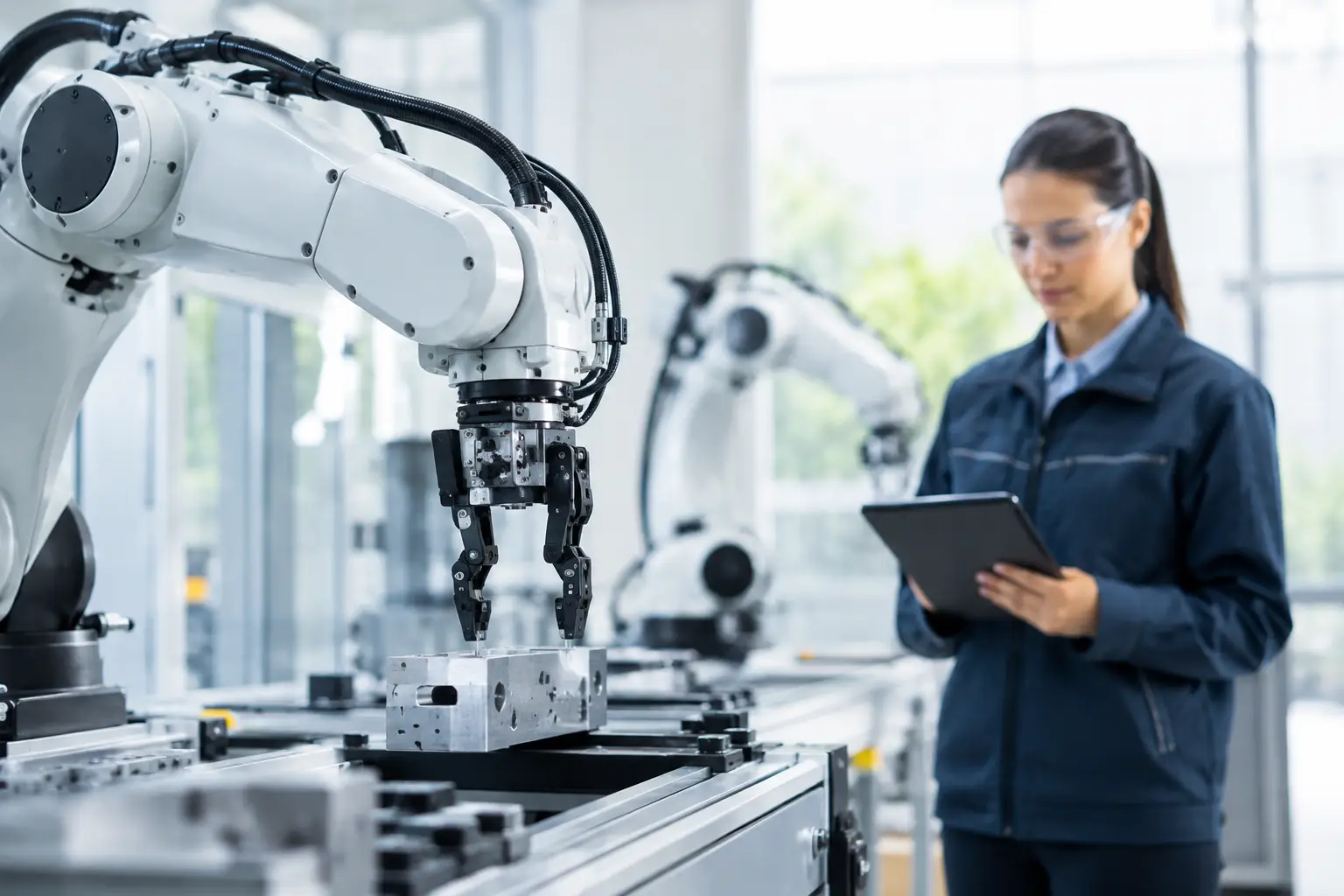
ABB, FANUC, and Yaskawa Electric remain central names in industrial robotics because factories have trusted their equipment for decades. Their robotic arms are used in welding, painting, assembly, material handling, and packaging across auto plants, electronics lines, food production, and heavy industry.
ABB stands out for its broad electrical-equipment and automation footprint, which gives it exposure beyond robotic arms. FANUC is closely associated with high-volume factory automation and computer numerical control systems, while Yaskawa has a major presence in motion control, drives, and industrial robots. Their installed bases create an advantage that newer entrants cannot easily replicate: customers need spare parts, technicians, software upgrades, and confidence that a production line will not sit idle.
The risk is cyclicality. Industrial customers often delay large automation projects when interest rates are high, auto demand weakens, or global manufacturing activity slows. But persistent labor scarcity and the push to bring more production closer to end markets remain long-term supports for automation spending.
Intuitive Surgical has built the medical-robotics model
Intuitive Surgical has become the clearest public-market example of a robotics company with a powerful recurring-revenue engine. Its da Vinci surgical systems are expensive capital assets, but the business does not end at installation. Procedures generate ongoing demand for instruments, accessories, service, and training.
That model matters because it ties revenue to clinical use rather than one-time equipment sales. As surgeons and hospitals become more familiar with robotic-assisted procedures, utilization can support growth even when hospital capital budgets are under pressure. The company also benefits from high switching costs, since surgeons require training and hospitals invest heavily in workflow changes.
Still, medical robotics is not a guaranteed straight line upward. Hospitals scrutinize return on investment, insurers influence procedure economics, and competitors are working to gain ground in surgical specialties. Investors should watch procedure growth and system utilization as closely as new machine placements.
Symbotic is a high-stakes warehouse-automation bet
Symbotic has become one of the most closely watched names in warehouse automation. The company designs robotic systems that move, sort, store, and retrieve goods inside large distribution centers. Its opportunity is clear: retailers and wholesalers need faster order fulfillment, better inventory visibility, and lower dependence on physically demanding warehouse labor.
The appeal is not simply the robot fleet. Symbotic’s value proposition is a highly integrated system connecting storage, software, conveyors, vision technology, and fulfillment operations. That can make deployments sticky and strategically important for customers.
The financial trade-off is execution. Large warehouse projects can involve lengthy sales cycles, complicated installations, customer concentration, and uneven revenue recognition. A company can report a substantial order backlog while still facing timing risk as facilities are built and systems are commissioned. That makes the stock story potentially attractive, but less predictable than a diversified industrial supplier.
Teradyne brings collaborative robots into smaller workplaces
Teradyne is best known for semiconductor testing, but its robotics businesses have made it an important player in collaborative automation. Universal Robots produces cobots designed to work alongside people in applications such as machine tending, packaging, and light assembly. Mobile Industrial Robots focuses on autonomous mobile robots that move materials through factories and warehouses.
Cobots address a different market from large automotive robots. Many small and midsize manufacturers lack the floor space, engineering staff, or production volume for a traditional automation cell. A simpler robot that can be reprogrammed for a new task offers flexibility, even if it cannot match the speed or payload of larger systems.
That flexibility is a competitive advantage, but it also means cobot demand can be sensitive to small-business capital budgets. The category needs continued improvements in ease of use, safety, and integration before it reaches the adoption levels often projected by industry forecasts.
NVIDIA supplies the computing layer
NVIDIA is not a traditional robot manufacturer, yet it has become increasingly important to the robotics economy. Its processors, software tools, simulation platforms, and AI infrastructure are used by companies developing autonomous machines, industrial digital twins, machine-vision systems, and advanced driver-assistance technology.
The company’s role illustrates a key investment distinction. Some businesses sell robots directly, while others benefit from the computing, sensors, and software required to make robots more capable. NVIDIA can capture demand from multiple robotics categories without carrying the same installation and servicing burden as a warehouse or factory-robot vendor.
Its exposure is also broader than robotics, which cuts both ways. Robotics may become a meaningful long-term growth driver, but its impact can be difficult to isolate within a company whose revenue is heavily influenced by data-center AI spending and semiconductor cycles.
Tesla, Boston Dynamics, Figure, and Agility are testing the humanoid thesis
Humanoid robotics attracts the biggest headlines because the potential market is enormous. A machine that can operate in spaces designed for people could eventually take on repetitive industrial and logistics work without facilities being redesigned around it. Tesla’s Optimus program, Hyundai-owned Boston Dynamics, Figure AI, and Agility Robotics are among the companies drawing attention in this race.
But humanoids remain a high-risk part of the sector. Demonstrations can show impressive balance, navigation, and manipulation, yet commercial success depends on uptime, safety, maintenance cost, battery performance, and whether the machine can complete useful work faster or cheaper than alternatives. A purpose-built robot with wheels and a single specialized task may still offer a better return for many customers.
For now, private companies such as Figure and Agility offer limited direct access for most public-market investors. Their progress nevertheless matters because it could reshape spending by manufacturers, logistics operators, component suppliers, and AI infrastructure providers.
What investors should watch next
The next phase of robotics growth will be decided less by publicity than by deployment data. Investors should focus on orders, backlog conversion, gross margins, service revenue, and customer concentration. These figures reveal whether a company is moving from pilot projects to repeatable installations.
Labor costs are another major variable. When wages rise, turnover remains elevated, or skilled technicians are scarce, the payback period on automation improves. Conversely, weak consumer demand can make companies reluctant to commit to major equipment purchases, even if the long-term case for robotics remains intact.
Interest rates also matter. Robots are often financed through capital budgets, leases, or multi-year transformation programs. Lower borrowing costs can support investment, while tighter credit conditions may delay projects at retailers, manufacturers, and hospitals. Trade policy and supply-chain disruptions can add another layer, especially for companies relying on global components or selling into export-heavy industrial markets.
The practical read-through for the market
Robotics is becoming a wider business story because it sits at the intersection of labor, AI, manufacturing, health care, defense, and logistics. That does not make every robotics stock a buy, or every factory pilot a success. Deployment is difficult, and customers will demand measurable savings rather than impressive videos.
The most durable opportunity may belong to companies that make automation boring in the best possible sense: dependable enough for a night shift, flexible enough for changing demand, and economical enough that finance chiefs can defend the investment. For readers tracking the next industrial cycle, that is where the real signal is likely to emerge.