
Volkswagen has approved a sweeping restructuring plan that includes cutting about 50,000 jobs, reducing its vehicle lineup by roughly half and ending automobile production at four plants in Germany, as Europe’s largest automaker responds to intensifying competition from China and pressure from U.S. tariffs.
As reported by AP News, the plan, approved by Volkswagen’s board on Thursday, is being led by CEO Oliver Blume and represents a major effort to lower costs and restructure the group’s manufacturing footprint. The company is confronting increasingly aggressive competition from lower-cost Chinese automakers while also dealing with higher U.S. tariffs on European vehicle exports.
Volkswagen Targets 50,000 Positions
The restructuring calls for an adjustment of approximately 50,000 positions across the company, including management roles. Volkswagen currently employs about 650,000 people globally.
The company was already reducing its workforce under an earlier restructuring program. According to Blume, Volkswagen had signed approximately 37,000 agreements to reduce headcount, primarily through early retirement, as of August 21.
The newly approved plan also calls for leaner management structures and shorter decision-making processes as Volkswagen seeks to reduce operating costs and improve efficiency.
Four German Plants Face End of Vehicle Production
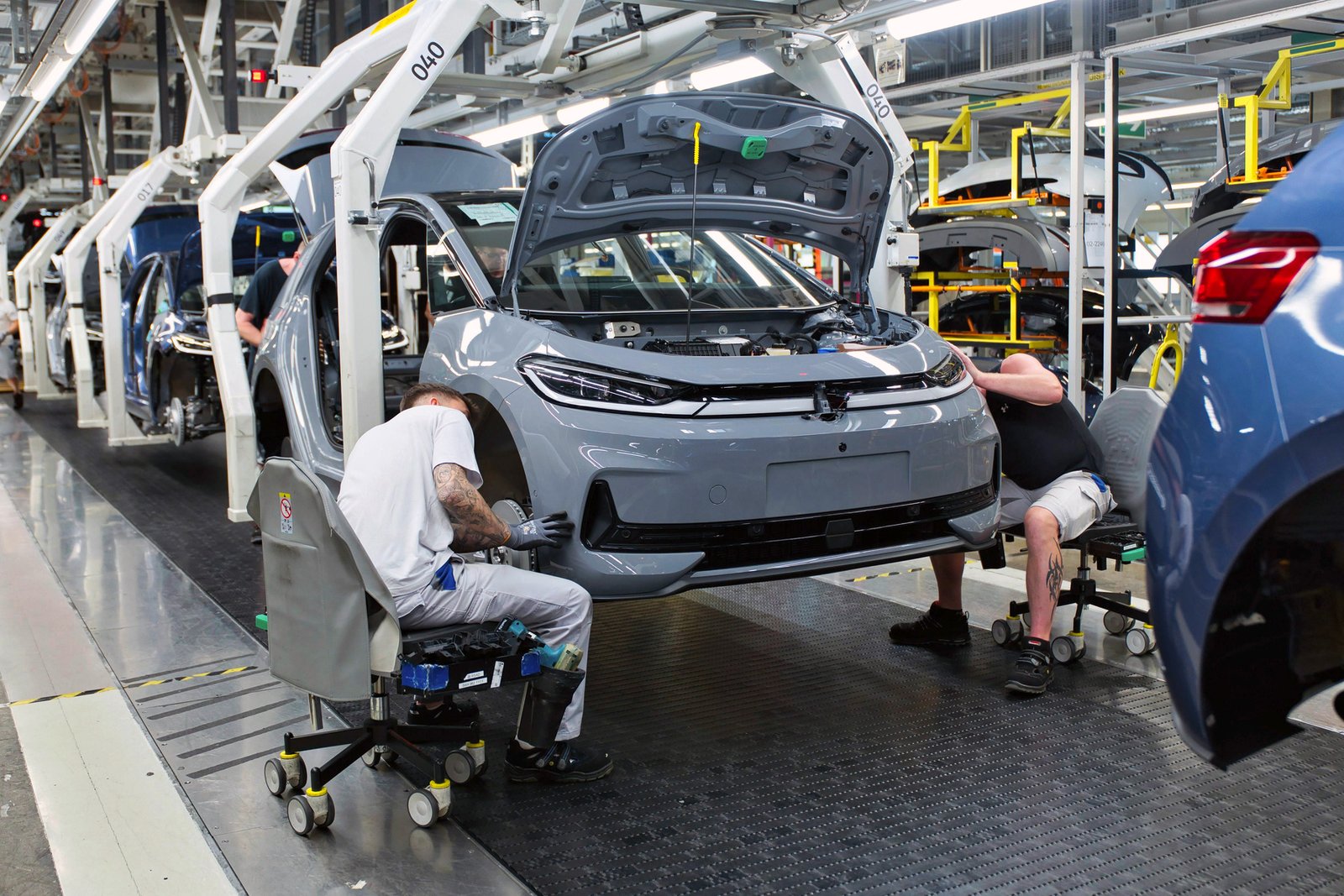
Volkswagen said automobile production is expected to be phased out at facilities in Emden, Zwickau, Hanover and Neckarsulm. The company currently estimates that it has excess European production capacity equivalent to approximately 500,000 vehicles.
The company has left open the possibility of finding alternative uses for the affected facilities. AP reported Friday that Volkswagen currently expects the production phaseouts to take place between 2031 and 2034.
Model Lineup to Be Cut by About Half
Another major component of the restructuring is a reduction of approximately 50% in Volkswagen’s model lineup.
Reducing the number of models would allow the automaker to produce greater volumes of individual vehicles, spreading fixed manufacturing and development costs across more units. The strategy is intended to simplify Volkswagen’s operations while improving the economics of its remaining models.
China and U.S. Tariffs Increase Pressure
China remains one of Volkswagen’s biggest challenges. The automaker has historically generated substantial profits in the country, but Chinese manufacturers have expanded rapidly with competitively priced vehicles while competition in the domestic market has intensified.
Volkswagen is simultaneously facing higher U.S. tariffs on vehicles imported from Europe.
The financial pressure has already appeared in its results. Volkswagen’s first-half 2026 after-tax earnings fell about 30%, according to AP, amid weaker sales in China.
The restructuring therefore extends beyond workforce reductions. It represents a broader effort to reduce manufacturing capacity, simplify the product portfolio and lower fixed costs as Volkswagen adjusts its operations to changing competitive and trade conditions across its major markets.