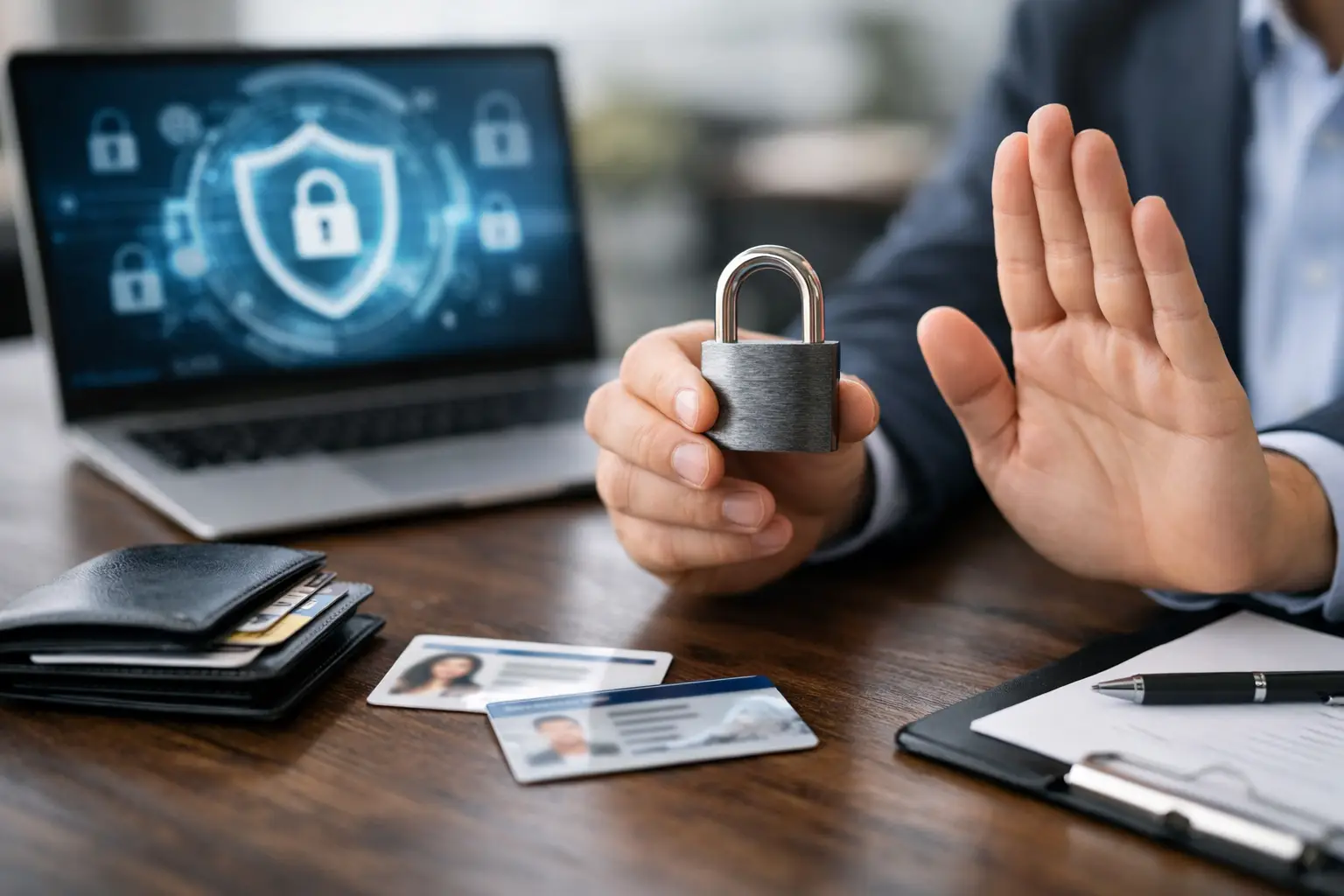

A stolen Social Security number can sit quietly for months before it becomes a declined mortgage application, a drained checking account, or a tax refund filed in someone else’s name. The Federal Trade Commission received more than 1.1 million identity theft reports in 2023, underscoring a hard reality for consumers: knowing how to prevent identity theft is now part of basic financial management.
Fraudsters do not need to take over every part of your financial life to create damage. One exposed password may be enough to enter an email inbox, reset bank credentials, and intercept alerts. A name, date of birth, and Social Security number can be used to seek credit, government benefits, or medical services. The objective is not perfect invisibility. It is making your information difficult to use, quick to detect, and expensive for a criminal to exploit.
Start With the Protection That Has the Biggest Financial Impact
For most adults, a credit freeze is the highest-value move. A freeze restricts new creditors from accessing your credit file, which makes it far harder for someone to open a new card, personal loan, or auto loan in your name. It does not affect your existing credit cards, your credit score, or your ability to use credit already open.
Place freezes with all three major credit bureaus: Equifax, Experian, and TransUnion. The freeze is free by federal law. When you need to apply for a mortgage, apartment, credit card, or loan, you can temporarily lift it for a selected period or for a specific lender.
A credit lock can offer similar control through a bureau’s app or website, but its terms can differ and may be tied to paid monitoring products. A statutory freeze has clearer legal protections, which is why it is generally the stronger default. Parents should also consider freezing credit files for minor children, whose Social Security numbers can be especially valuable because misuse may go unnoticed for years.
Treat Your Email Account Like the Master Key
Many consumers focus on bank apps while leaving their email account protected by a recycled password. That is backwards. Email is often the recovery channel for financial accounts, brokerage platforms, retailers, health portals, and even password managers. If a criminal controls it, they can initiate password resets across your digital life.
Use a unique, long password for email and turn on multifactor authentication. An authenticator app or physical security key is generally more resistant to phishing than text-message codes. Text messages still add meaningful protection when they are the only option, but they can be vulnerable to SIM-swapping attacks in which a fraudster persuades a mobile carrier to move your number to another device.
A password manager makes unique passwords practical. It also reduces the temptation to reuse a favorite password across a bank, a streaming service, and a shopping account. Reuse turns a data breach at a low-stakes retailer into a possible financial-account takeover.
How to Prevent Identity Theft Across Your Accounts
The right security settings vary by institution, but the baseline should be consistent: use a different password for every important account, enable multifactor authentication, and activate alerts for logins, large transactions, password changes, and new payees.
Pay particular attention to your bank, credit cards, brokerage account, retirement plan, mobile carrier, and primary email. These accounts either hold money directly or can be used to reach other accounts. For bank and brokerage accounts, ask whether the institution offers a verbal password, trusted-contact feature, transfer alerts, or restrictions on wire transfers and new external accounts.
Security questions deserve more skepticism than they receive. A question such as your mother’s maiden name or the street where you grew up may be discoverable through social media, public records, or data-broker profiles. Where a site permits it, use random answers saved in your password manager rather than factual information.
Watch the Places Fraud Shows Up First
Identity theft is often detected by the victim, not stopped by a security system. That makes routine review a financial control, much like checking a brokerage statement or reviewing an insurance renewal.
Check your credit reports regularly for unfamiliar accounts, addresses, inquiries, or name variations. U.S. consumers can obtain free reports from each nationwide credit bureau through the federally authorized annual credit report service. Review at least one report every few months, or all three after a major breach or suspicious event.
Also examine bank and card transactions frequently. Do not dismiss a small, unfamiliar charge as harmless. Criminals often test whether an account is active with a modest purchase before attempting a larger transaction. Report suspicious activity immediately, even if the amount is only a few dollars.
Turn on alerts rather than relying solely on monthly statements. Useful settings include transaction notifications, low-balance alerts, ATM withdrawal notices, new-device login alerts, and notifications when personal details or transfer instructions change. The more quickly you spot fraud, the more likely you are to limit the financial and administrative fallout.
Protect Your Social Security Number and Tax Refund
Your Social Security number is not a routine loyalty-program field. Provide it only when there is a clear legal, tax, employment, credit, or government-services reason to do so. Ask why it is needed, how it will be stored, and whether another identifier will work. A doctor’s office, school, or service provider may request it as a matter of habit rather than necessity.
Tax identity theft remains a consequential risk because a fraudulent return can be filed before the legitimate taxpayer submits one. Filing early can reduce that opening. Taxpayers may also be able to request an Identity Protection PIN from the IRS, a six-digit number required to file a federal tax return under their Social Security number. Keep that PIN secure and do not share it by email, text, or phone.
Be cautious with tax documents, payroll records, and old returns. Shred what you no longer need and store current records in a locked cabinet or encrypted digital vault. The same approach applies to medical explanations of benefits, which can expose enough personal data for medical identity fraud.
Reduce the Information You Leave in Reach
The old advice to shred documents still matters, but modern exposure is more often digital and social. Phishing messages now imitate banks, package carriers, employers, government agencies, and investment platforms with convincing urgency. Their purpose is usually to capture a password, one-time verification code, or personal detail.
Pause before acting on an unexpected message that asks you to sign in, pay, verify a transaction, or call a number. Do not use the link or phone number supplied in the message. Instead, open the institution’s app, type its known web address yourself, or call the number on the back of your card.
Public Wi-Fi is not automatically unsafe, but it is not the place to handle sensitive transactions if you can avoid it. Use your mobile connection or wait until you are on a trusted network for banking, tax filing, or account recovery. Keep phones and computers updated, use a screen lock, and enable remote location and wipe features.
Social media also deserves a cleanup. Birthdays, hometowns, pet names, travel plans, employer details, and family relationships can help criminals answer security prompts or make a scam sound credible. You do not need to disappear from social platforms. Limit public visibility and assume that any detail posted publicly can be combined with data from elsewhere.
If Your Data Is Exposed, Move Faster Than the Fraudster
A breach notification is not proof that identity theft has happened, but it is a reason to tighten controls. Change the password for the affected service immediately, especially if it was reused. Review connected accounts, turn on alerts, and consider a credit freeze if one is not already active.
If you see clear signs of identity theft, document everything. Contact the affected bank, card issuer, lender, or service provider through a verified channel. Dispute fraudulent transactions and accounts, place fraud alerts or freezes as needed, and file an identity theft report with the FTC. Save confirmation numbers, letters, screenshots, and dates of every call. Those records can matter if an account dispute or credit-report correction takes weeks to resolve.
Do not let embarrassment slow the response. Sophisticated fraud operations target careful, financially literate people because their goal is volume and opportunity, not a judgment about the victim. The most useful defense is a disciplined one: freeze access to new credit, secure the accounts that can reset everything else, and make suspicious activity impossible to ignore.
Identity protection works best when it becomes part of your regular financial routine, alongside paying bills, reviewing investments, and planning for taxes. Fifteen minutes spent setting alerts or checking a report can prevent a far more expensive fight later.
—
Disclosure: This content is for informational and educational purposes only and does not constitute financial, legal, cybersecurity, or professional advice. Readers should verify applicable procedures with the relevant institutions or government agencies and seek qualified professional guidance when appropriate.