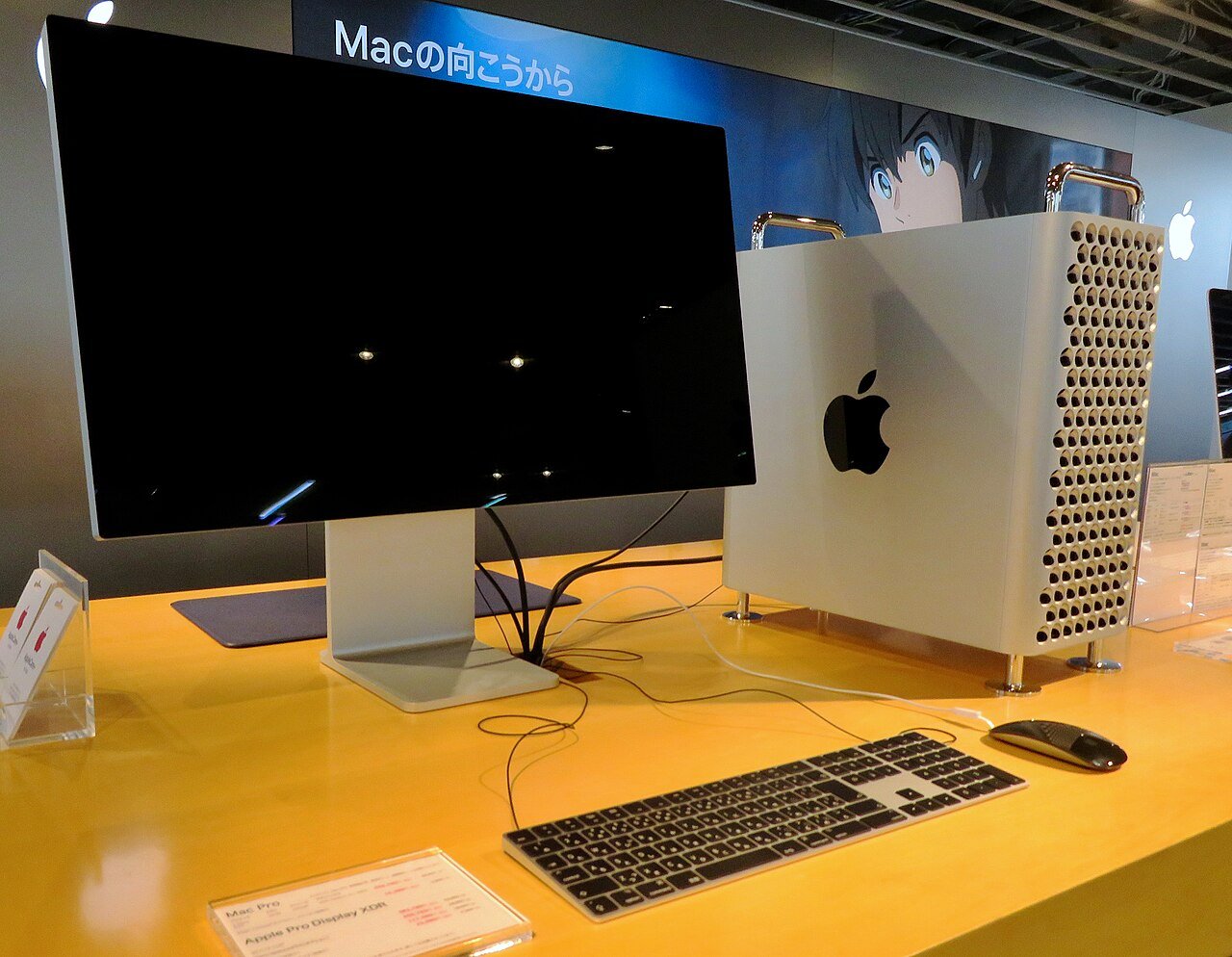

Apple has quietly discontinued its Mac Pro desktop, signaling a strategic shift toward the Mac Studio as the centerpiece of its high-performance computing lineup.
The move comes as the Mac Pro—once positioned as Apple’s most powerful workstation—had not received a meaningful update in nearly three years, raising questions about its long-term role within the company’s product ecosystem.
Strategic Shift Toward Efficiency and Performance
Introduced in 2022, the Mac Studio quickly gained traction among professionals by offering comparable processing power at a significantly lower price point than the Mac Pro.
While the Mac Pro started at $6,999, the Mac Studio delivers overlapping capabilities in a more compact form factor, powered by Apple’s in-house silicon chips that have redefined performance-per-dollar across its product lineup.
This transition reflects Apple’s broader strategy of consolidating its hardware offerings around Apple Silicon, optimizing both performance and cost efficiency.
End of an Era for Apple’s Modular Workstation
The discontinuation of the Mac Pro marks the end of an era for Apple’s modular desktop line, which historically catered to niche professional users requiring high customization and expansion capabilities.
However, with advancements in chip architecture and unified memory systems, Apple has increasingly prioritized integrated performance over modular flexibility, aligning with industry trends toward more streamlined computing solutions.
Mac Studio to Receive Major Upgrades
Looking ahead, Apple is expected to further strengthen the Mac Studio’s position in its lineup. The company plans to introduce updated models with faster processors later this year, reinforcing its commitment to the platform, according to Bloomberg News.
These upgrades are likely to target creative professionals, developers, and enterprise users seeking high-performance computing without the complexity or cost of legacy workstation systems.
Apple’s decision underscores a broader shift in the computing industry, where power efficiency, compact design, and integrated systems are increasingly favored over traditional modular desktops.