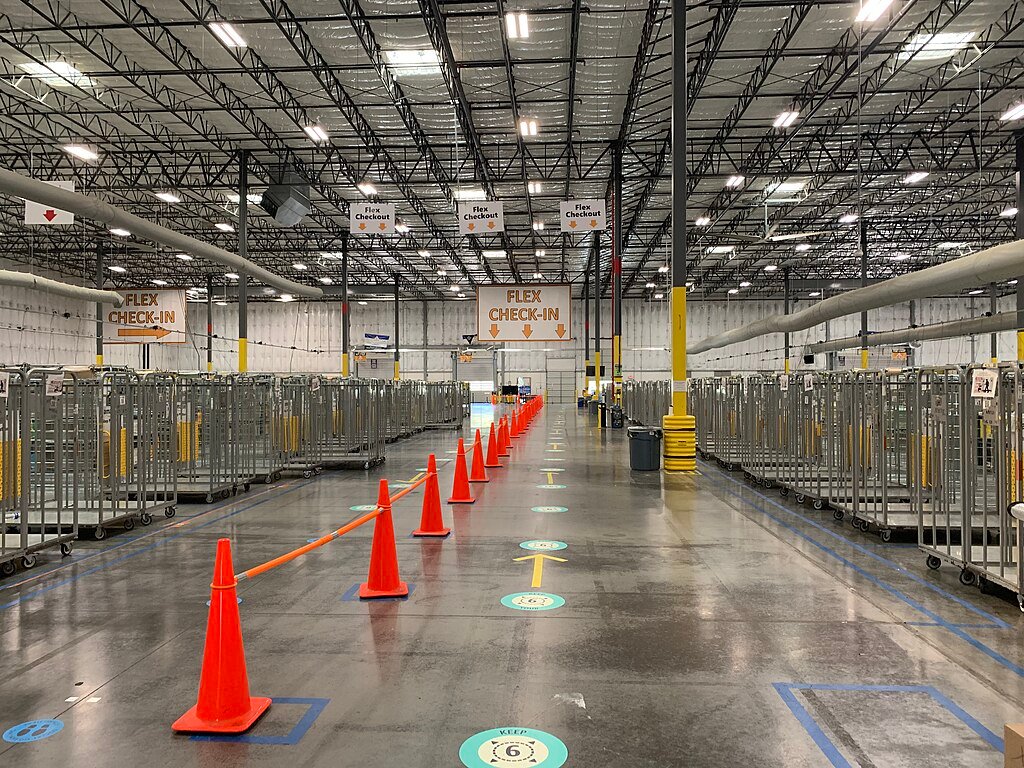

In a shift at the top of global commerce, Amazon has surpassed Walmart to become the world’s largest company by revenue in 2025, ending Walmart’s 13-year reign as the top revenue generator globally.
According to financial data reported by Bloomberg, Amazon posted $716.9 billion in revenue for 2025, narrowly exceeding Walmart’s $713.2 billion. The milestone marks a defining moment in the evolution of global retail — and underscores the transformative role of cloud computing in reshaping corporate scale.
A 13-Year Run Comes to an End
Walmart had held the title of the world’s largest company by sales since 2012, leveraging its unmatched physical retail footprint and global supply chain dominance.
However, in 2025, Amazon edged ahead — not purely because of retail, but because of its technology infrastructure arm: Amazon Web Services (AWS).
AWS: The Decisive Driver
AWS generated $129 billion in revenue in 2025, becoming the key growth engine that pushed Amazon beyond Walmart.
Unlike Walmart, which remains primarily a retail-driven enterprise, Amazon operates a diversified business model that includes:
- Cloud computing (AWS)
- E-commerce marketplace
- Advertising services
- Logistics and fulfillment
- Subscription services (Prime)
- Artificial intelligence infrastructure
Without AWS, Amazon’s total revenue would have been approximately $588 billion — still significant, but not enough to surpass Walmart.
More importantly, Amazon’s revenue growth rate over the past decade has significantly outpaced Walmart’s, reflecting the scalability of digital infrastructure compared to brick-and-mortar retail expansion.
Retail vs. Technology Infrastructure
The milestone highlights a structural shift in the global economy:
| Walmart Model | Amazon Model |
|---|---|
| Physical retail dominance | Digital & infrastructure ecosystem |
| Low-margin retail scale | High-margin cloud computing |
| Global store footprint | Global data center footprint |
AWS operates in a segment where Walmart does not meaningfully compete — enterprise cloud computing, AI infrastructure, and hyperscale data services.
As artificial intelligence workloads expand globally, AWS continues to benefit from surging demand for cloud infrastructure, further widening Amazon’s strategic moat.
What This Means for Global Markets
Amazon overtaking Walmart signals more than a ranking shift:
Cloud computing has become foundational infrastructure
Corporate scale increasingly depends on digital platforms
Revenue leadership now reflects hybrid retail + technology models
AI and enterprise services are reshaping corporate hierarchies
This transition may influence investor allocation, market valuations, and competitive strategies across retail and technology sectors.
Outlook for 2026 and Beyond
While the margin between Amazon and Walmart remains narrow, analysts suggest that AWS growth, AI infrastructure demand, and advertising expansion could sustain Amazon’s leadership position — provided macroeconomic conditions remain stable.
Meanwhile, Walmart continues to invest in e-commerce, automation, and supply chain digitization in an effort to narrow the technological gap.